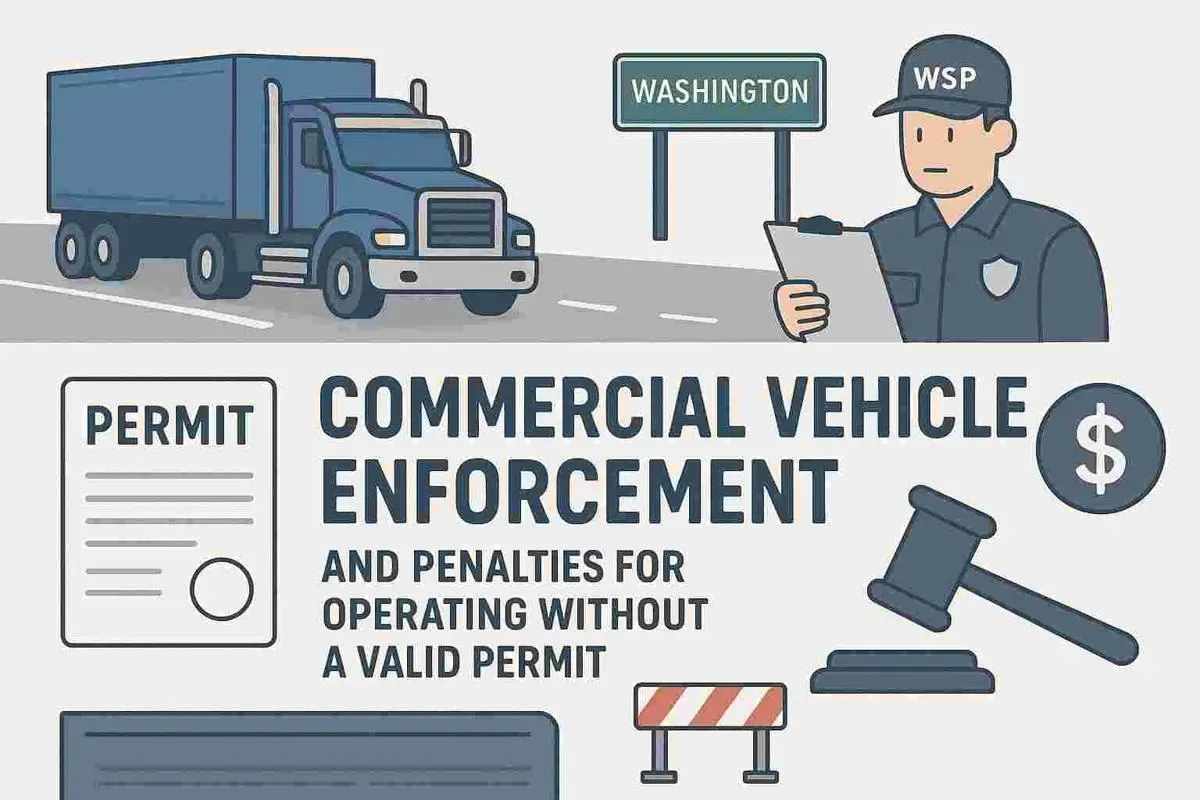
Commercial vehicle permitting in Washington ensures that trucks operate safely, legally, and within infrastructure limits. The Washington State Department of Transportation (WSDOT) and the Washington State Patrol (WSP) jointly enforce these laws.
Operating without a valid permit—such as an oversize/overweight (OS/OW), trip, or temporary vehicle permit—can result in serious penalties, fines, and potential out-of-service orders. Enforcement helps protect roads, bridges, and public safety while maintaining fair competition in the trucking industry.
2. Purpose of Commercial Vehicle Permits
Commercial truck permits are required to:
-
Authorize oversize or overweight vehicles to travel on state highways safely.
-
Ensure loads comply with bridge and road capacity limits.
-
Collect fees that fund road maintenance and repair.
-
Track and manage freight movement across the state.
-
Maintain compliance with federal and state safety standards.
Permits verify that a carrier’s vehicle meets Washington’s legal weight, dimension, and safety requirements and that it is operating on an approved route.
3. Agencies Responsible for Enforcement
-
Washington State Patrol (WSP): Conducts roadside inspections, weigh station checks, and safety compliance reviews.
-
Washington State Department of Transportation (WSDOT): Issues permits and manages the online Self-Issue Permit System (SIPS).
-
Washington Department of Licensing (DOL): Oversees vehicle registration and carrier operating authority.
Together, these agencies ensure that trucks operate safely, within permitted limits, and with proper documentation.
4. Common Violations
-
Operating without an active oversize/overweight permit.
-
Exceeding permitted weight or dimensions.
-
Operating with an expired or incorrect permit.
-
Failing to carry proof of permit while in operation.
-
Operating on a route not authorized by the permit.
-
Tampering with permit documentation or electronic records.
5. Penalties for Operating Without a Valid Permit
Violations are treated seriously and can result in multiple consequences:
| Type of Violation | Typical Penalty | Enforcement Agency |
|---|---|---|
| Operating without a valid permit | Fines from $250 to $1,000+ depending on load and intent | WSP / WSDOT |
| Overweight or oversize violations | Per-pound fines (up to several thousand dollars) | WSP |
| Repeated or willful violations | Out-of-service orders, suspension of operating authority | WSP / FMCSA |
| Tampering or falsifying permits | Criminal misdemeanor, possible jail time | WSP |
| Route violations (unsafe travel path) | Additional fines and suspension of permit privileges | WSDOT |
Example: A carrier operating an overweight truck without a valid OS/OW permit on I-90 could face fines exceeding $5,000, plus towing and storage costs until compliance is verified.
6. Enforcement Methods
-
Weigh Stations: Located along I-5, I-90, and other major highways to verify truck weight, dimensions, and permits.
-
Portable Scales: Used by troopers for spot checks in rural or construction zones.
-
Electronic Permit Verification: Many permits are digital; WSP officers can verify permits through the WSDOT database.
-
Safety Inspections: Officers check for mechanical condition, logbook compliance, and permit documentation.
7. Consequences Beyond Fines
-
Operational Delays: Trucks without proper permits can be detained until permits are purchased and compliance is achieved.
-
Record Impact: Violations are recorded in a carrier’s safety history, potentially increasing insurance premiums and FMCSA scores.
-
Reputation Damage: Repeat offenders risk losing business contracts or freight partnerships.
8. Prevention and Compliance Tips
-
Always confirm permit validity before travel (check expiration and route restrictions).
-
Keep a digital or printed copy of permits in the cab.
-
Monitor weight and dimensions closely to stay within authorized limits.
-
Train drivers and dispatchers on permit requirements and enforcement zones.
-
Use WSDOT’s Commercial Vehicle Services Portal or SIPS for online permit management.
9. Conclusion
Operating a commercial vehicle in Washington without a valid permit exposes carriers to costly fines, operational delays, and reputational harm. The state’s strict enforcement, led by WSDOT and the Washington State Patrol, protects public safety and infrastructure.
Maintaining proper permits, accurate records, and regulatory compliance is essential for efficient, lawful, and sustainable trucking operations in Washington.