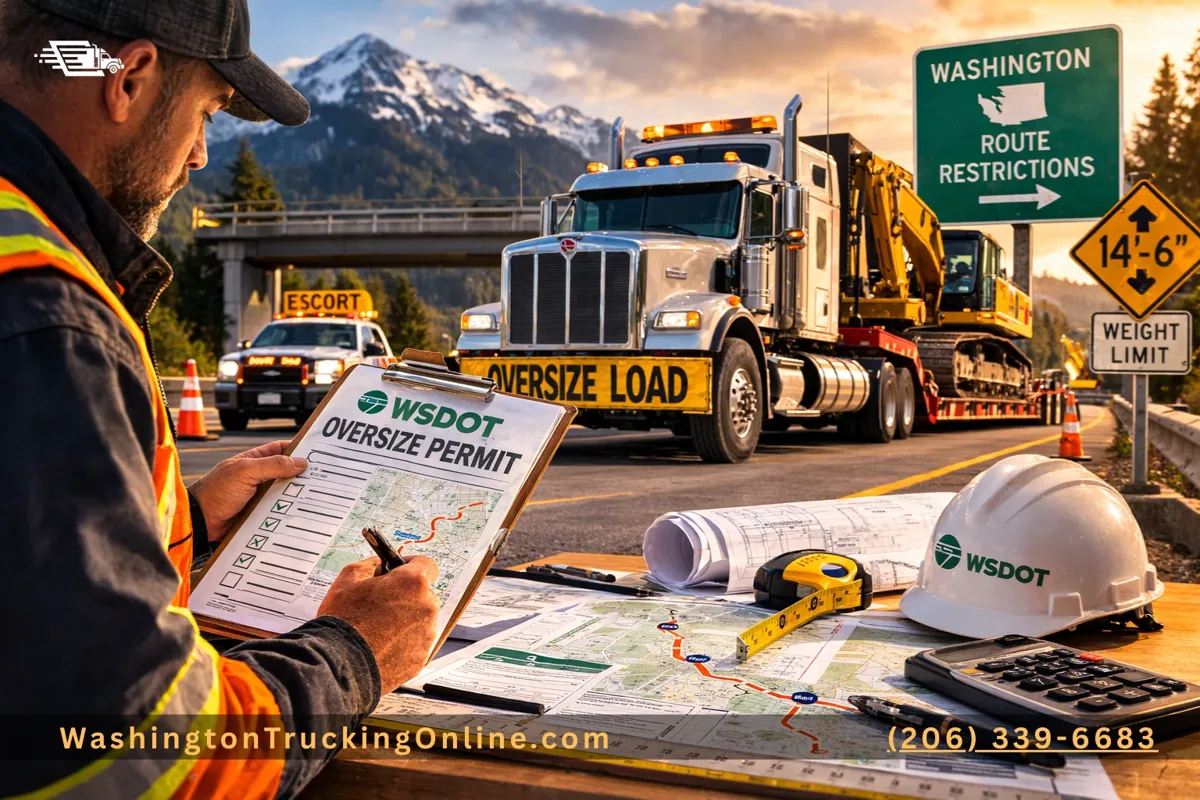
Common Reasons WSDOT Rejects Oversized Permit Applications and How to Avoid Them
Transporting oversize or overweight loads through Washington requires a valid permit from the Washington State Department of Transportation (WSDOT). While the process may appear simple, many truckers and trucking companies face delays or rejections due to avoidable mistakes in their applications. Understanding the most common issues can help carriers move freight more efficiently while avoiding costly setbacks.
Why WSDOT Oversized Permit Applications Are Rejected
1. Incorrect or Incomplete Load Information
One of the most common reasons permit applications are rejected is inaccurate load details. WSDOT requires precise measurements, including height, width, overall length, total weight, and axle spacing. Even small discrepancies can result in an application being denied, as WSDOT must confirm that the load can safely travel on the requested route.
How to avoid it:
Carefully measure your load and verify axle weights and configurations before submitting the permit application.
2. Route Restrictions and Clearance Issues
Oversized permits in Washington are typically route-specific. If the requested route includes bridges with insufficient weight capacity, low overpasses, or restricted highways, the permit may be rejected or returned for corrections.
How to avoid it:
Plan routes carefully and confirm that bridges, roads, and clearances can accommodate the load’s dimensions and weight.
3. Missing Escort or Pilot Car Requirements
Certain oversize loads require escort vehicles depending on their width, height, or length. If an application fails to include required escort vehicles, WSDOT may deny the permit until the proper safety measures are included.
How to avoid it:
Review Washington escort vehicle requirements in advance and include them in the application when applicable.
4. Incorrect Vehicle or Carrier Information
Permit applications must include accurate carrier credentials, vehicle identification, and registration information. Missing or outdated information can cause delays or outright rejection.
How to avoid it:
Ensure all company details, vehicle registrations, and WSDOT numbers are up to date and correctly entered before submitting.
How Permit Rejections Impact Truckers and Fleets
For independent truckers, a rejected permit can mean delayed deliveries and lost revenue. For trucking companies managing multiple shipments, permit errors can disrupt entire logistics schedules and create unexpected operational costs.
That’s why accurate applications and proper planning are critical for maintaining reliable freight movement.
Why Many Carriers Use Our Permit Services
Applying for WSDOT permits requires attention to detail and a strong understanding of state regulations. For busy carriers and dispatch teams, managing permits internally can slow down operations when loads need to move quickly.
Washington Trucking Online helps simplify the process. Our permit specialists understand WSDOT requirements, verify routes, and ensure applications are submitted correctly the first time. By using our service, truckers and trucking companies can reduce the risk of rejected permits, avoid delays, and keep their loads moving on schedule.
Instead of spending hours navigating permit rules, you can focus on running your business while we handle the paperwork.
WSDOT oversize permit rejections are often caused by small but critical mistakes. By verifying load details, carefully planning routes, and ensuring all application information is accurate, carriers can avoid unnecessary delays. And for those who want a faster, smoother permitting process, working with an experienced permit service can make all the difference.