Key Topics
-
Permitted Border Crossings
-
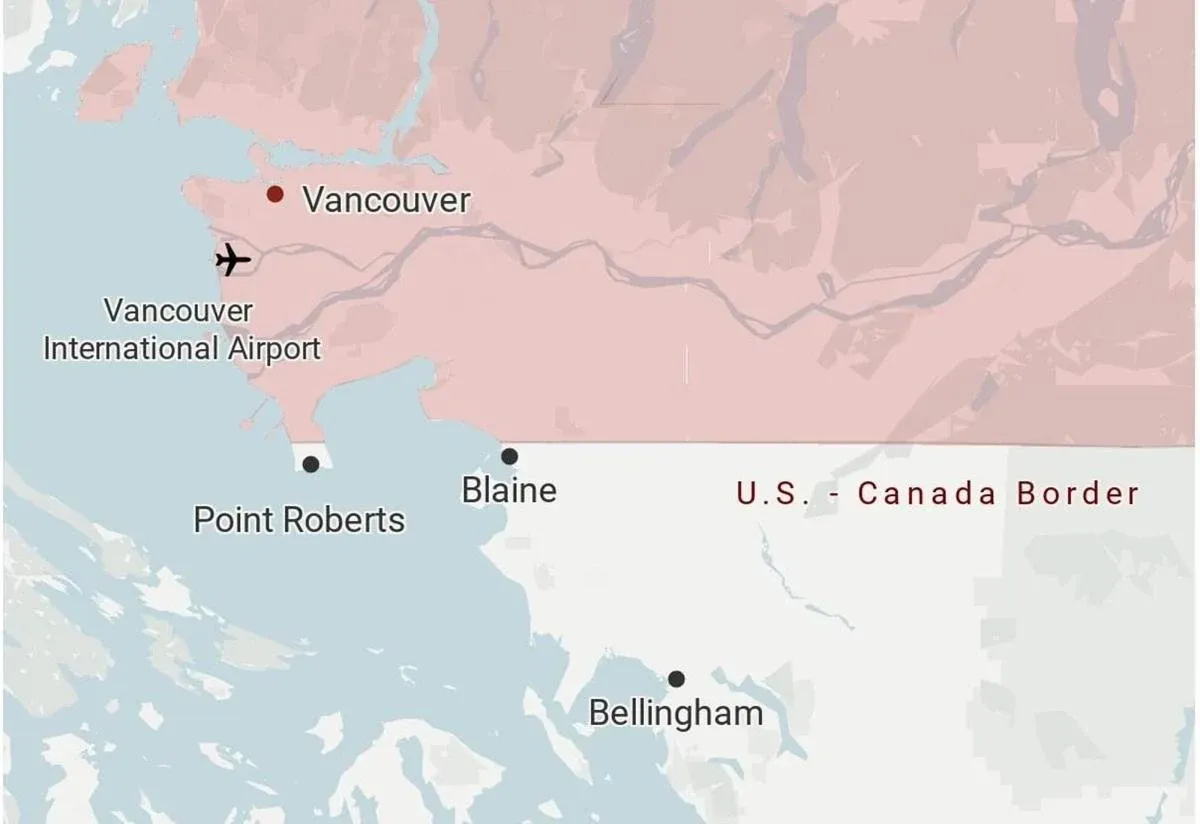
Commercial trucks between Washington and BC generally use specific ports of entry, like the Pacific Highway Crossing (for commercial vehicles) rather than crossings reserved for passenger traffic.
-
You need to choose the correct crossing depending on your origin/destination and whether it’s specialized freight (hazardous materials, temperature-sensitive, etc.).
-
-
Customs & Documentation
Carriers must have a variety of paperwork, some required by U.S. authorities, others by Canadian, including:
-
Commercial Invoice, Bill of Lading, Packing List.
-
Certificate of Origin (if the goods benefit from trade agreement status)
-
Advance manifest systems: ACE (Automated Commercial Environment) for U.S. exports and ACI (Advance Commercial Information) for Canadian imports.
-
Carrier codes and numbers: CBSA (Canada Border Services Agency) carrier code for entering Canada; in general foreign-based trailers and containers have specific rules for temporary importation without duty under certain tariff items.
-
-
Hours of Service (HOS) / Driver Duty, Rest Requirements
-
When operating in the U.S., Canadian drivers must comply with U.S. HOS rules. When operating in Canada, U.S. drivers must follow Canadian HOS.
-
Record of Duty Status (RODS) or equivalent log-requirements apply, especially for the current day and preceding 7 days when entering the U.S. past certain distances.
-
-
Electronic Logging / ELD / AOBRD
-
Canada/Mexico domiciled motor carriers (i.e., Canadian carriers) that cross into the U.S. are subject to the U.S. ELD rule, or must have equivalent logging devices.
-
Devices used must meet U.S. technical specifications and be registered/recognized as required.
-
-
Weight, Size, and Configuration Requirements
-
Trucks crossing the border must either meet the more restrictive rules of the two jurisdictions or have permits/exemptions. Differences in axle weight limits, steering axle limits, trailer configurations (e.g., split tandems), etc., mean that some trucks might need to reconfigure (move fifth wheel, adjust axles) before crossing into Canada.
-
In Washington State, there is a gross vehicle weight (GVW) limit (often 80,000 lbs standard, but higher in some cases with permits or special routes) and Washington has a registration option giving up to ~105,500 lbs for certain interstate routes (though this often depends on road classification/highway).
-
-
Temporary Importation and Use of Foreign Equipment in Canada
-
Foreign trailers / conveyances / containers used in international commercial transportation can be temporarily imported into Canada duty-free under specific tariff items (e.g. 9801 series), provided certain conditions are met.
-
There are limitations on what point-to-point hauling foreign-based vehicles can do within Canada (they generally cannot do domestic Canadian deliveries except incidental to the international leg).
-
-
Hazardous Materials and Special Freight
-
If carrying hazardous goods (hazmat), both countries have strict regulations: TDG (Transportation of Dangerous Goods) in Canada; U.S. HazMat regulations. The shipper/carrier must ensure proper documentation, placarding, packaging and compliance.
-
Additional permits or certifications may be needed depending on the commodity and route.
-
-
Security, FAST / C-TPAT, Pre-clearance Programs
-
Programs such as FAST (Free and Secure Trade) allow pre-approved carriers, importers, drivers expedited processing at the border.
-
Enrolling in these programs helps reduce delays and inspections.
-
-
Carrier Responsibilities and Temporary Import Rules (Canada)
-
Under CBSA rules, carriers must use their CBSA-assigned carrier codes, prepare cargo / control numbers, and use correct conveyance reference numbers.
-
For foreign-based trailers/containers arriving in Canada, rules around temporary import, examination, inspection, seal numbers etc. apply.
-
-
Insurance, Registration, and Licensing
-
Vehicles crossing the border need appropriate insurance that is valid in both countries (or separately, if required).
-
Drivers must hold valid commercial licenses acceptable to both jurisdictions (CDL for U.S.; equivalent provincial license if operating in Canada).
-
Some programmatic or regulatory compliance (insurance, safety ratings) must meet inspection and safety standards in both countries.
-
Practical Implications / “Challenges” for Carriers
-
Load & Equipment Compatibility
Because of differences in weight/axle/steering rules, sometimes trucks need to reconfigure or re-spec before crossing. E.g. moving the fifth wheel, changing tire size or spacing, shifting load to meet axle/bridge formula constraints. -
Border Delays, Inspection Times
Even with correct documentation, border inspection (customs, agriculture, security) can lead to delays. Using FAST / C-TPAT / other trusted shipper programs helps. -
Harmonizing Logging / Hours of Service
Drivers or carriers operating cross-border routes must maintain good records and ensure they understand differing HOS rules — crossing a border may involve switching from one set of rules to another. -
Regulatory Complexity / Compliance Cost
The need to comply with both U.S. and Canadian rules (insurance, taxes, safety inspections, environmental, HOS, etc.) adds cost and complexity. -
Legal Restrictions on Domestic Traffic (Cabotage)
Foreign carriers (Canadian carriers in U.S., U.S. carriers in Canada) generally are not allowed to pick up domestic shipments that begin and end inside the foreign country (i.e., U.S. carrier can’t pick up in U.S., drop in Canada, then pick another domestic U.S. load unless properly authorized). This is often called “cabotage.”