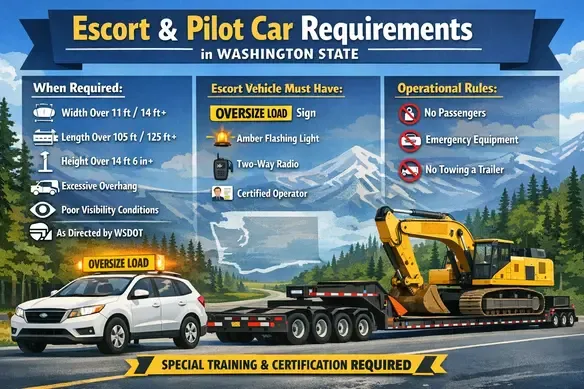
1. When Escort / Pilot Cars Are Required
Escort requirements depend on the dimensions of the load, the route, and whether travel occurs during special conditions.
Common Triggers for Escort Vehicles
Pilot cars are typically required when a load exceeds:
-
12 feet wide
-
14 feet 6 inches high (varies by route)
-
Over-length combinations
-
Certain overweight or superload thresholds
-
Loads traveling on two-lane highways, through urban areas, or near restricted bridges
WSDOT specifies escort needs directly on the permit.
2. Types of Escort Vehicles in Washington
Washington recognizes several escort types:
Pilot Cars (Private Escorts)
-
Used for most oversize loads
-
Must meet vehicle, equipment, and certification standards
Law Enforcement Escorts
-
Required for superloads or extremely oversized loads
-
Coordinated through WSDOT and Washington State Patrol
Some loads require multiple escort vehicles (front and rear).
3. Pilot Car Positioning Rules
Escort vehicle placement depends on load size and road type:
-
Front escort:
-
Required for height-sensitive or wide loads
-
-
Rear escort:
-
Required for long or heavy loads
-
-
Two escorts:
-
Often required on two-lane highways or for extreme width
-
The permit will specify exact positioning requirements.
4. Pilot Car Certification Requirements
Washington requires certified pilot/escort drivers:
-
Drivers must hold a Washington State Pilot/Escort Certification
-
Certification includes:
-
Training and testing
-
Knowledge of traffic control and communication
-
Understanding of state-specific escort laws
-
Out-of-state escorts must meet Washington reciprocity standards, if applicable.
5. Escort Vehicle Equipment Requirements
Each pilot car must be properly equipped:
-
“OVERSIZE LOAD” sign (visible and legible)
-
Amber rotating or flashing lights
-
Two-way communication with the truck
-
High-visibility safety apparel
-
Traffic control devices (as required)
Failure to meet equipment standards can invalidate the permit.
6. Communication and Coordination
Escort vehicles must:
-
Maintain constant communication with the truck driver
-
Provide warnings for:
-
Narrow bridges
-
Oncoming traffic
-
Low clearances
-
Road hazards
-
Effective communication is a major enforcement focus.
7. Route-Specific and Special Conditions
Escort requirements may increase due to:
-
Urban areas (Seattle, Tacoma, Spokane)
-
Port-related routes
-
Construction zones
-
Night, weekend, or holiday travel
-
Mountain or two-lane roads
Always review the route conditions listed on the permit.
8. Enforcement and Compliance Checks
Washington State Patrol enforces escort compliance through:
-
Weigh stations
-
Roadside inspections
-
Mobile enforcement units
Officers verify:
-
Escort certification
-
Proper positioning
-
Required equipment
-
Communication capability
Non-compliance can result in citations, delays, or out-of-service orders.
9. Penalties for Escort Violations
Violations may lead to:
-
Fines and citations
-
Permit invalidation
-
Load shutdown until compliant escorts arrive
-
Increased scrutiny on future permits
10. Best Practices for Carriers
-
Review escort requirements before scheduling the move
-
Use Washington-certified pilot car operators
-
Ensure escort vehicles match permit specifications
-
Confirm communication methods before departure
-
Plan routes carefully to avoid last-minute changes
Summary
Washington State has strict escort and pilot car requirements tied directly to load size, route, and travel conditions. Escorts must be properly certified, equipped, and positioned as stated on the permit. Compliance helps prevent delays, fines, and enforcement issues.