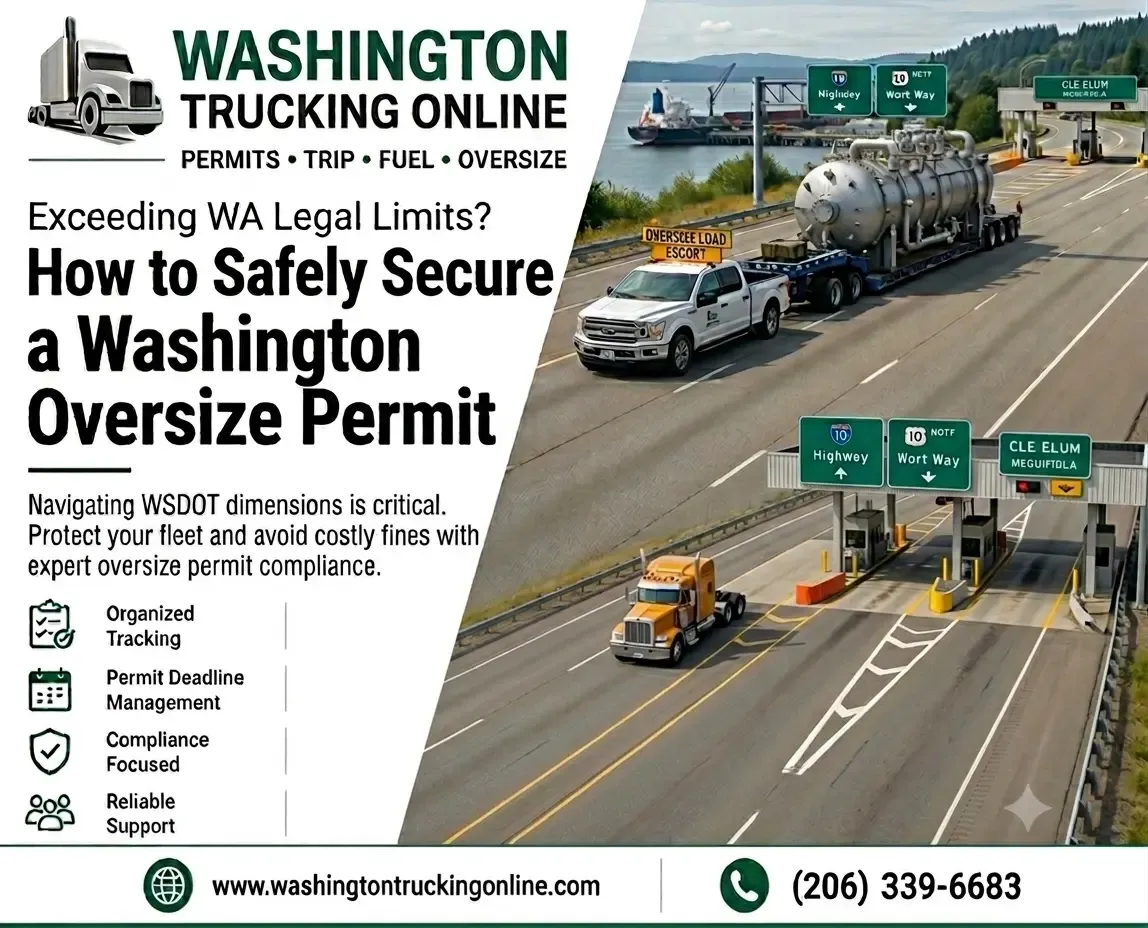
Operating commercial vehicles in Washington State demands strict compliance with legal dimensions. A truck or cargo exceeding 8 feet 6 inches in width, 14 feet in height, or 53 feet in length, or surpassing legal axle weights, is classified as oversize or overweight. Transporting specialized equipment or non-divisible loads requires a valid permit before departure.
Navigating Washington State Department of Transportation (WSDOT) guidelines can be challenging for dispatchers and fleet operators. Miscalculating overhang limits or axle weight configurations can lead to operational issues, delays, or permit rejections.
Operating an oversized load without proper credentials or violating route restrictions can result in hefty state penalties, citations at Port of Entry scales, and out-of-service orders. Effective permit strategies are essential for trucking companies to maintain compliance and ensure efficient freight movement in Washington.
Understand Non-Divisible Load Requirements
Washington enforces strict rules regarding what constitutes an oversize load. Permits are typically only issued for non-divisible loads, meaning cargo that cannot be reasonably dismantled or divided into smaller shipments to fit standard legal dimensions. Fleets must carefully assess their cargo configurations before requesting an oversize clearance to ensure compliance at the weigh stations.
Verify Specific Route Restrictions
Oversize permits in Washington are usually tied to specific travel corridors and conditions. Factors such as bridge clearances, construction zones, and local traffic regulations dictate where an oversize load can safely travel. Dispatchers must ensure that drivers have direct access to their approved permit routing and understand any curfew or weekend travel restrictions that apply to their specific load dimensions.
Calculate Axle Weight Allocations
Properly distributing weight across your vehicle axles is just as critical as managing physical height and width. Overweight configurations require precise axle spacing reports before WSDOT will approve transit across specific highway corridors. Keeping tracking logs of your tractor and trailer wheelbases prevents costly weight calculation errors before submitting paperwork.
Coordinate Required Escort Services
Extremely large loads often require certified pilot cars or law enforcement escorts to navigate tight state routes and urban junctions safely. Failing to secure the mandatory number of front or rear escort vehicles as stipulated by your permit criteria instantly invalidates your operating authority. Maintaining clear communication between dispatchers and pilot drivers ensures full compliance along the way.
Maintain Digital Permit Access
Drivers must always carry active, legible copies of their approved permits while traversing Washington highways and ports of entry. Utilizing a digital delivery system ensures that roadside enforcement officers can quickly verify credentials at the scales, eliminating administrative confusion and reducing costly terminal delays.
Why Many Trucking Companies Choose Our Service
Many trucking companies rely on Washington Trucking Online because we simplify the permit process and help reduce administrative stress.
Our team assists with trip, fuel, oversize, and overweight permits, helping carriers stay organized and compliant.
By providing reliable permit support and responsive service, we help trucking companies focus on moving freight rather than navigating permit paperwork.
Build a Long-Term Permit Management Strategy
Securing Washington oversize permits becomes much easier when trucking companies establish standardized procedures.
Organized tracking systems, proactive communication, routine compliance reviews, and careful route management can significantly reduce permit-related issues.