Types of Trucking Permits in Washington
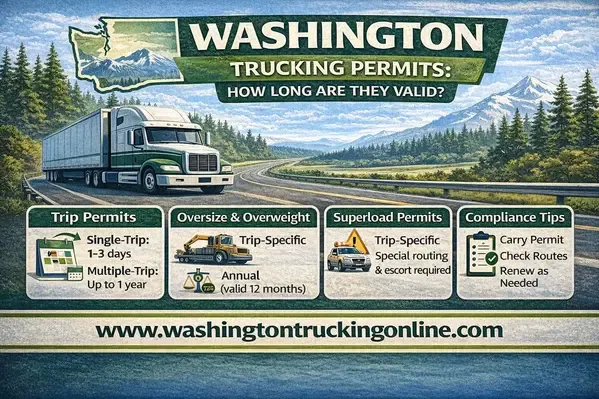
Washington permits fall into several categories:
-
Trip Permits – Temporary permits for out-of-state or non-IRP trucks.
-
Oversize/Overweight Permits – Required for vehicles exceeding legal size or weight limits.
-
Superload Permits – For exceptionally large or heavy loads that need special routing and escort.
Each type of permit has different validity periods, depending on vehicle type, trip purpose, and load size.
Trip Permits
-
Single-Trip Permits: Valid for one-way or round-trip travel within Washington. Usually limited to the duration of the trip, often 72 hours.
-
Multiple-Trip Permits: Can be valid for a calendar month or up to a year, depending on the issuing authority and the fleet size.
-
Out-of-State Trucks: Temporary trip permits typically cover short-term operations, often three days per trip.
Oversize & Overweight Permits
-
Single-Trip Oversize/Overweight Permits: Usually valid for the duration of a specific trip only.
-
Annual Oversize Permits: For carriers frequently moving similar loads, Washington allows annual permits, valid for 12 months.
-
Superload Permits: Validity is trip-specific due to the specialized routing and escort requirements.
Compliance Tips
-
Always check the expiration date before starting your trip.
-
Carry a physical or electronic copy of the permit in the vehicle.
-
Plan routes carefully — some permits are only valid for specified highways or regions.
-
Renew or purchase new permits for repeat trips or multiple loads.
-
Failure to maintain valid permits can result in fines, penalties, and possible load impoundment.
Summary Table
| Permit Type | Typical Validity | Notes |
|---|---|---|
| Trip Permit (Single-Trip) | 3 days | For non-IRP/out-of-state trucks |
| Trip Permit (Multiple-Trip) | Up to 1 year | For frequent trips within WA |
| Oversize/Overweight | Trip-specific or annual | Depends on route and weight |
| Superload | Trip-specific | Special routing & escort required |
Washington trucking permits are designed to match the nature and frequency of commercial operations, so understanding validity is key to smooth and legal transport.