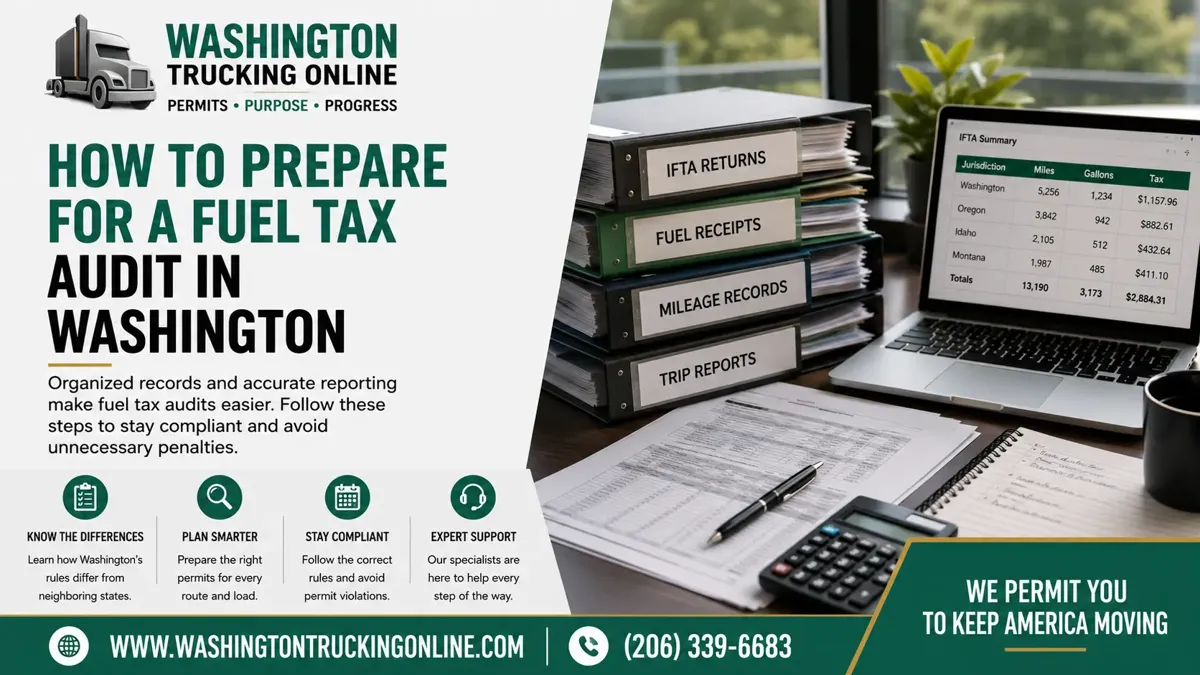
How To Prepare For A Fuel Tax Audit In Washington
Table Of Contents
-
Introduction
-
Understanding Fuel Tax Audits In Washington
-
Documents You Should Prepare Before An Audit
-
Review Your Mileage Records Carefully
-
Verify Your Fuel Purchase Records
-
Compare Your IFTA Returns With Supporting Documentation
-
Common Mistakes That Can Affect Audit Results
-
Best Practices For Staying Audit Ready
-
Why Many Trucking Companies Choose Our Service
-
FAQ
Introduction
Preparing for a fuel tax audit is an important part of operating a commercial vehicle in compliance with Washington's fuel tax regulations. If your company is licensed under the International Fuel Tax Agreement (IFTA), maintaining accurate records throughout the year can make the audit process significantly easier while reducing the risk of penalties or additional tax assessments.
A fuel tax audit is designed to confirm that the mileage and fuel purchases reported on your quarterly IFTA returns are supported by reliable documentation. Although receiving an audit notice may seem stressful, businesses with organized records are generally able to complete the review more efficiently.
Whether you operate a single truck or manage a large fleet, understanding what auditors examine and preparing your records in advance can help you approach the audit with confidence and minimize unnecessary delays.
Understanding Fuel Tax Audits In Washington
Washington participates in IFTA, allowing qualified interstate carriers to report fuel taxes through one quarterly return instead of filing separately with every participating jurisdiction. To ensure these returns are accurate, carriers may periodically be selected for a fuel tax audit.
During an audit, the reviewing agency compares the information reported on your IFTA returns with supporting records such as mileage reports, fuel receipts, trip documentation, and vehicle records. The objective is to verify that taxes have been reported correctly based on where your vehicles actually traveled.
Being selected for an audit does not necessarily indicate that mistakes have been made. Some audits are part of routine compliance programs, while others may result from unusual reporting patterns, amended returns, or inconsistencies identified during the review of quarterly filings.
Understanding the purpose of the audit helps carriers prepare the appropriate documentation and respond more effectively throughout the process.
Documents You Should Prepare Before An Audit
Having complete and organized records is one of the best ways to prepare for a fuel tax audit. Collecting your documentation before the audit begins allows you to respond to requests quickly and demonstrates that your reporting procedures are well maintained.
Records commonly reviewed include:
-
Quarterly IFTA tax returns
-
Trip reports
-
Driver logs
-
GPS mileage reports
-
Electronic Logging Device (ELD) records
-
Dispatch records
-
Fuel receipts
-
Fuel card statements
-
Vehicle registration documents
-
Lease agreements, when applicable
-
Vehicle identification records
Organizing these documents by reporting quarter makes them easier to locate and helps streamline the audit process.
Review Your Mileage Records Carefully
Mileage documentation is one of the most important components of a fuel tax audit. Every trip should accurately reflect where the vehicle traveled and the number of miles driven within each jurisdiction.
Before the audit, compare your trip reports with GPS data or ELD records to identify any discrepancies. Correcting missing or inaccurate information before the review begins can help reduce questions during the audit.
Each trip record should generally include:
-
Trip dates
-
Origin and destination
-
Routes traveled
-
Beginning and ending odometer readings
-
Total trip mileage
-
Miles traveled within each jurisdiction
-
Vehicle identification
Maintaining consistent mileage records throughout the year helps support accurate quarterly reporting and simplifies future audits.
Verify Your Fuel Purchase Records
Fuel purchase documentation supports the fuel tax credits claimed on your quarterly IFTA returns. Every receipt should be complete, legible, and easy to match with the vehicle that made the purchase.
Before the audit begins, review your fuel records carefully to confirm they agree with your reported fuel purchases.
Each fuel receipt should typically contain:
-
Purchase date
-
Seller's name and location
-
Fuel type
-
Number of gallons purchased
-
Purchase amount
-
Vehicle identification, when available
If your fleet uses fuel cards, compare the monthly statements with individual receipts to ensure every transaction has been recorded accurately. Keeping digital copies of receipts in addition to paper records can also help preserve important documentation over time.
Compare Your IFTA Returns With Supporting Documentation
Your quarterly IFTA returns should accurately reflect your mileage and fuel purchase records. Before the audit, review each return and compare the reported information with your supporting documentation to verify consistency.
Pay particular attention to:
-
Total fleet mileage
-
Jurisdiction-specific mileage
-
Fuel purchases
-
Vehicle information
-
Tax calculations
-
Previously amended returns
Even small reporting errors may require additional explanations during the audit. Taking the time to review your filings beforehand can help ensure a smoother audit process.
Common Mistakes That Can Affect Audit Results
Many audit findings result from incomplete documentation rather than intentional reporting errors. Establishing consistent recordkeeping procedures throughout the year can help prevent many of the issues auditors commonly encounter.
Some of the most frequent problems include:
-
Missing fuel receipts
-
Incomplete trip reports
-
Incorrect jurisdictional mileage
-
Odometer discrepancies
-
Duplicate fuel entries
-
Illegible documentation
-
Missing vehicle records
-
Mathematical errors on quarterly returns
Performing periodic internal reviews allows carriers to identify and correct these issues before they become audit concerns.
Best Practices For Staying Audit Ready
Preparing for a fuel tax audit should be an ongoing effort rather than a last-minute task. Businesses that consistently organize their records are often better equipped to respond if an audit notice is received.
Review mileage reports regularly, reconcile fuel purchases with receipts, organize records by reporting period, and maintain secure digital backups whenever possible. Many carriers also perform internal compliance reviews before submitting each quarterly IFTA return to verify that all information is complete and accurate.
Developing strong recordkeeping habits not only simplifies future audits but also improves overall operational efficiency and helps maintain long-term compliance.
Why Many Trucking Companies Choose Our Service
Managing permit requirements while maintaining compliance with fuel tax regulations can take valuable time away from running your business. At Washington Trucking Online, we make the permit process simple by helping trucking companies obtain Washington trip permits, fuel permits, and oversize permits quickly and accurately. Our experienced team carefully reviews every application to help reduce common mistakes that can delay processing while providing responsive customer support whenever assistance is needed.
Whether you're an owner-operator or manage an entire fleet, our streamlined online application process saves time and helps you obtain the permits you need with confidence. We're committed to delivering reliable service, fast processing, and a hassle-free experience so you can focus on keeping your trucks on the road.
Submit your permit application today.
FAQ
What is a Washington fuel tax audit?
A Washington fuel tax audit verifies that the mileage and fuel purchases reported on your IFTA returns are supported by accurate and complete documentation.
What records should I keep for an IFTA audit?
You should retain trip reports, mileage records, fuel receipts, fuel card statements, driver logs, GPS or ELD reports, quarterly IFTA returns, and other supporting records.
Can electronic records be used during a fuel tax audit?
Yes. Electronic records, including GPS reports, ELD data, and digital fuel receipts, are generally acceptable when they are complete, accurate, and readily accessible.
What happens if my records are incomplete?
If supporting documentation cannot verify the information reported on your IFTA returns, the audit may result in additional tax assessments, interest, or penalties.
How can I prepare for a fuel tax audit before receiving a notice?
Maintain organized records throughout the year, review mileage reports regularly, reconcile fuel purchases with receipts, and verify your quarterly IFTA returns before filing.
For more information, visit the Washington State Department of Licensing.