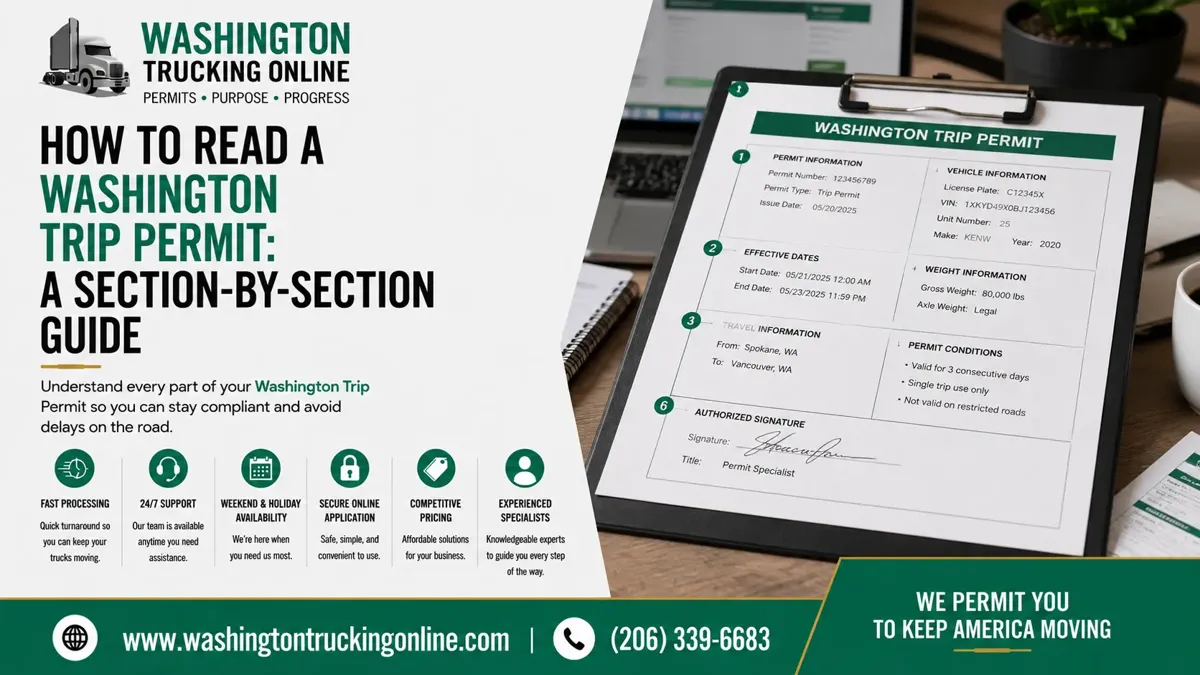
How To Read A Washington Trip Permit: A Section-By-Section Guide
Table of Contents
-
Introduction
-
What Is A Washington Trip Permit?
-
Permit Identification Information
-
Vehicle Information
-
Permit Effective Dates
-
Weight Information
-
Permit Conditions And Restrictions
-
What To Check Before Starting The Trip
-
What If The Information Does Not Match Your Truck?
-
Common Washington Trip Permit Reading Mistakes
-
Why Many Trucking Companies Choose Our Service
-
FAQ
Introduction
A Washington Trip Permit is an important document for commercial vehicles that need temporary authorization to operate in Washington. However, obtaining the permit is only part of the process. Trucking companies should also understand the information shown on the permit and make sure it matches the vehicle that will actually be operated.
A permit can contain important details about the vehicle, effective period, weight, and other requirements. Reviewing this information before starting the trip can help identify mistakes before they become compliance problems.
For trucking companies operating multiple vehicles, carefully reviewing each permit is especially important. A permit intended for one truck should not be confused with documentation for another vehicle in the fleet.
What Is A Washington Trip Permit?
A Washington Trip Permit provides temporary operating authorization for a qualifying commercial vehicle.
A commercial vehicle trip permit generally allows a single vehicle to operate at its maximum weight limit for three consecutive days, subject to applicable requirements and restrictions.
Because the permit is associated with a specific vehicle and a defined period of operation, trucking companies should review the document carefully before the vehicle begins traveling.
A Washington Trip Permit also serves a different purpose from other temporary credentials. Depending on the vehicle and operation, a carrier may have separate requirements involving fuel, oversize, overweight, or other authorizations.
Permit Identification Information
The first section to review is the basic permit identification information.
This information identifies the permit and the authorization associated with the vehicle. Depending on the permit format, it may include a permit number or other identifying information.
Trucking companies should confirm that the document belongs to the correct company and vehicle.
This is particularly important for fleets with multiple trucks. Keeping permits organized by vehicle can help prevent a driver from accidentally using a permit that was purchased for another truck.
Before departure, the driver should know which permit belongs to the vehicle being operated.
Vehicle Information
Vehicle information is one of the most important sections to review.
Compare the information on the permit with the actual truck and its registration documents. Pay close attention to vehicle-specific information such as the license plate and vehicle identification information.
Before starting the trip, verify:
-
License plate information
-
Vehicle identification information
-
Vehicle description
-
Registered vehicle information
-
Other vehicle-specific details shown on the permit
If the information does not match the truck, the carrier should resolve the discrepancy before operating under the permit.
A permit obtained for one vehicle should not simply be assumed to apply to another vehicle in the same fleet.
Permit Effective Dates
The effective period is another important part of the permit.
A Washington commercial vehicle Trip Permit is generally valid for three consecutive days. The driver should know when the permit becomes effective and when the authorized period ends.
Do not rely on memory when determining whether the permit is still valid.
This becomes especially important when a trip is delayed because of loading problems, traffic, weather, mechanical issues, or scheduling changes.
Before departure, verify the permit dates and make sure the planned operation falls within the authorized period.
Weight Information
Weight information should also be reviewed carefully.
A Washington commercial vehicle Trip Permit generally authorizes operation at the applicable maximum weight limit, subject to Washington requirements.
Before beginning the trip, make sure the vehicle and load are operating within the applicable weight limits.
This is particularly important when the truck is loaded after the permit has been obtained. The carrier should verify the actual loaded vehicle rather than assuming that having a Trip Permit eliminates the need to comply with applicable weight requirements.
If the vehicle or load requires additional authorization because of its weight or other characteristics, that requirement should be addressed before travel.
Permit Conditions And Restrictions
A Washington Trip Permit should not be treated simply as proof that a temporary credential was purchased.
The permit and applicable requirements may include conditions governing how the authorization can be used.
Trucking companies should review any instructions, restrictions, or conditions associated with the permit and make sure the driver understands them before starting the trip.
It is also important to understand the difference between different types of Washington temporary permits. A Trip Permit, Fuel Permit, and Oversize or Overweight Permit serve different purposes.
Having one type of permit does not automatically satisfy every requirement that may apply to a commercial vehicle.
What To Check Before Starting The Trip
Before entering Washington or beginning the permitted operation, perform a final review of the permit.
Check:
-
Permit number
-
Vehicle information
-
License plate
-
Vehicle identification information
-
Effective dates
-
Weight information
-
Permit conditions
-
Applicable restrictions
-
Driver documentation
-
Any additional authorization required for the trip
Then compare the permit with the actual truck.
This final review is particularly important for fleet operators. Drivers may have several documents available, and using the wrong permit can create an unnecessary compliance issue even when the company has obtained the correct permit for another vehicle.
What If The Information Does Not Match Your Truck?
If you discover that the permit does not match the truck, do not assume that the difference is insignificant.
For example, the permit may contain information for another vehicle in the fleet, or the truck may have been replaced after the permit was obtained.
A Washington Trip Permit is associated with the specific vehicle for which it was purchased. Therefore, a carrier should not simply use the document for a different truck.
If vehicle information is incorrect, the carrier should resolve the issue before operating under the permit.
Do not cross out information or make unauthorized changes to the permit. Altering information on a vehicle Trip Permit can invalidate the permit.
Common Washington Trip Permit Reading Mistakes
Checking only the expiration date: A permit can be within its valid period while still containing incorrect vehicle information.
Ignoring vehicle information: Always compare vehicle-specific information with the actual truck and registration records.
Using another truck's permit: A permit purchased for one vehicle should not simply be transferred to another vehicle.
Making handwritten corrections: Unauthorized corrections or alterations can invalidate a vehicle Trip Permit.
Forgetting the three-day period: The driver should know exactly when the permit becomes effective and when the authorized period ends.
Assuming one permit covers everything: A Trip Permit, Fuel Permit, and Oversize or Overweight Permit serve different purposes.
Failing to review the permit before departure: A quick document check can identify problems before the truck begins traveling.
Why Many Trucking Companies Choose Our Service
Many trucking companies choose Washington Trucking Online because the permitting process can be easier when experienced permit specialists handle the details. Our service provides fast processing, 24/7 customer support, weekend and holiday availability, a secure online application process, competitive pricing, and experienced permit specialists who understand Washington permitting requirements.
Whether you are operating a newly purchased truck, managing multiple vehicles, or preparing for a temporary trip through Washington, having the correct permit information prepared before travel can make the process much smoother.
Apply online today for your Washington Trip Permit.
FAQ
What should I check first on a Washington Trip Permit?
Start with the permit identification and vehicle information. Then verify the effective dates, weight information, and any applicable conditions or restrictions.
How long is a Washington commercial vehicle Trip Permit valid?
A Washington commercial vehicle Trip Permit is generally valid for three consecutive days.
Can I use a Washington Trip Permit for another truck?
No. A Trip Permit is associated with the specific vehicle for which it was purchased and should not simply be transferred to another vehicle.
What if the permit information is wrong?
Do not assume the error can be ignored. Review the discrepancy and resolve it before operating the vehicle under the permit.
Can I cross out incorrect information on my Washington Trip Permit?
No. Unauthorized corrections or alterations to information on a vehicle Trip Permit can invalidate the permit.
Does a Washington Trip Permit cover an oversize load?
Not automatically. A Trip Permit and an Oversize or Overweight Permit serve different purposes. Additional authorization may be required when the vehicle or load exceeds applicable size or weight limits.
Should the driver review the permit before starting the trip?
Yes. The driver should verify that the permit belongs to the correct vehicle, is within its effective period, and contains the information required for the planned operation.
Can a fleet manager use one Washington Trip Permit for several trucks?
No. The permit is associated with the specific vehicle for which it was purchased. Fleet operators should keep each permit with the appropriate vehicle.
For more information, visit the Washington State Department of Licensing.