1. Key Enforcement Agencies
Several agencies are responsible for trucking permit compliance in Washington:
-
Washington State Department of Transportation (WSDOT)
-
Issues oversize/overweight permits
-
Defines size, weight, routing, and travel time restrictions
-
-
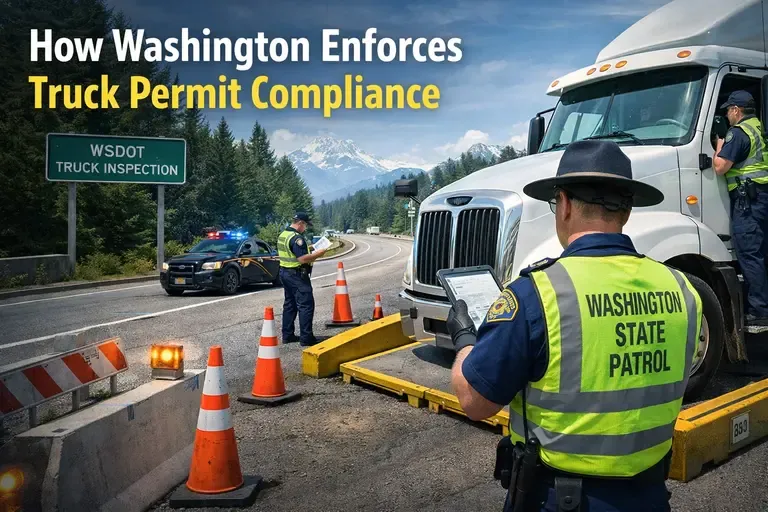
Washington State Patrol – Commercial Vehicle Enforcement (CVE)
-
Conducts roadside inspections and weigh-in monitoring
-
Checks permits, load securement, and vehicle safety
-
-
Local Transportation Departments and Municipalities
-
Enforce truck route restrictions and local bridge regulations
-
2. Weigh Stations and Inspection Sites
Washington operates permanent weigh stations and mobile inspection units:
-
Trucks must stop at weigh stations unless exempt
-
Inspections include:
-
Vehicle and axle weights
-
Oversize/overweight permits
-
Load securement
-
Safety equipment and signage
-
-
Some stations use weigh-in-motion (WIM) technology to identify overweight vehicles without stopping traffic
3. Roadside and Mobile Enforcement
Washington State Patrol can perform inspections anywhere on public highways:
-
Permit verification
-
Checking escort vehicle compliance
-
Load securement, flags, and signage
-
Travel time restrictions
Non-compliance can result in citations, fines, or out-of-service orders.
4. Permit and Route Verification
Washington permits are route-specific:
-
Trucks must follow the approved route exactly
-
Enforcement checks for:
-
Restricted bridges
-
State highways or local roads with weight limits
-
Construction or seasonal closures
-
Deviating from the permitted route may invalidate the permit.
5. Oversize/Overweight Load Enforcement
Oversize and overweight loads receive additional attention:
-
Dimensions (height, width, length) are measured
-
Gross and axle weights verified
-
Escort requirements enforced
-
Superloads may require law enforcement escort or certified pilot vehicles
6. Port-Related Enforcement
Special enforcement applies to port areas like Seattle, Tacoma, and Vancouver:
-
Oversize/overweight deliveries often have specific time windows
-
Port authorities monitor compliance with permits and escorts
-
Enforcement may include roadside inspections and documentation checks
7. Seasonal and Special Restrictions
-
Washington has seasonal weight limits, particularly during spring (frost and thaw laws)
-
Permitted travel may be restricted to certain hours, weekdays, or seasons
-
Construction zones may also impose temporary route changes
8. Technology in Compliance
Washington leverages technology to enhance enforcement:
-
Weigh-in-motion (WIM) sensors on highways
-
Electronic permit verification systems
-
GPS-based tracking for certain superloads
-
Automated notifications for non-compliant vehicles
9. Penalties for Non-Compliance
Violations in Washington can result in:
-
Civil fines or citations
-
Out-of-service orders
-
Permit suspension or revocation
-
Forced load reduction or re-routing
-
Increased scrutiny in future permit applications
10. Best Practices for Carriers
-
Obtain all permits before entering Washington State at https://www.washingtontruckingonline.com/
-
Follow approved routes exactly
-
Carry all permits, insurance, and inspection documentation in the truck
-
Ensure escort vehicles are certified and positioned correctly
-
Stay updated on seasonal and road-specific restrictions
-
Consider using a permit service for complex or superload operations
Summary
Washington enforces truck permit compliance through weigh stations, roadside inspections, route monitoring, escort verification, and technology-based oversight. Carriers must comply with permit conditions, travel restrictions, and escort requirements to avoid penalties and ensure safe operations.
https://wsdot.wa.gov/travel/commercial-vehicles/commercial-vehicle-permits