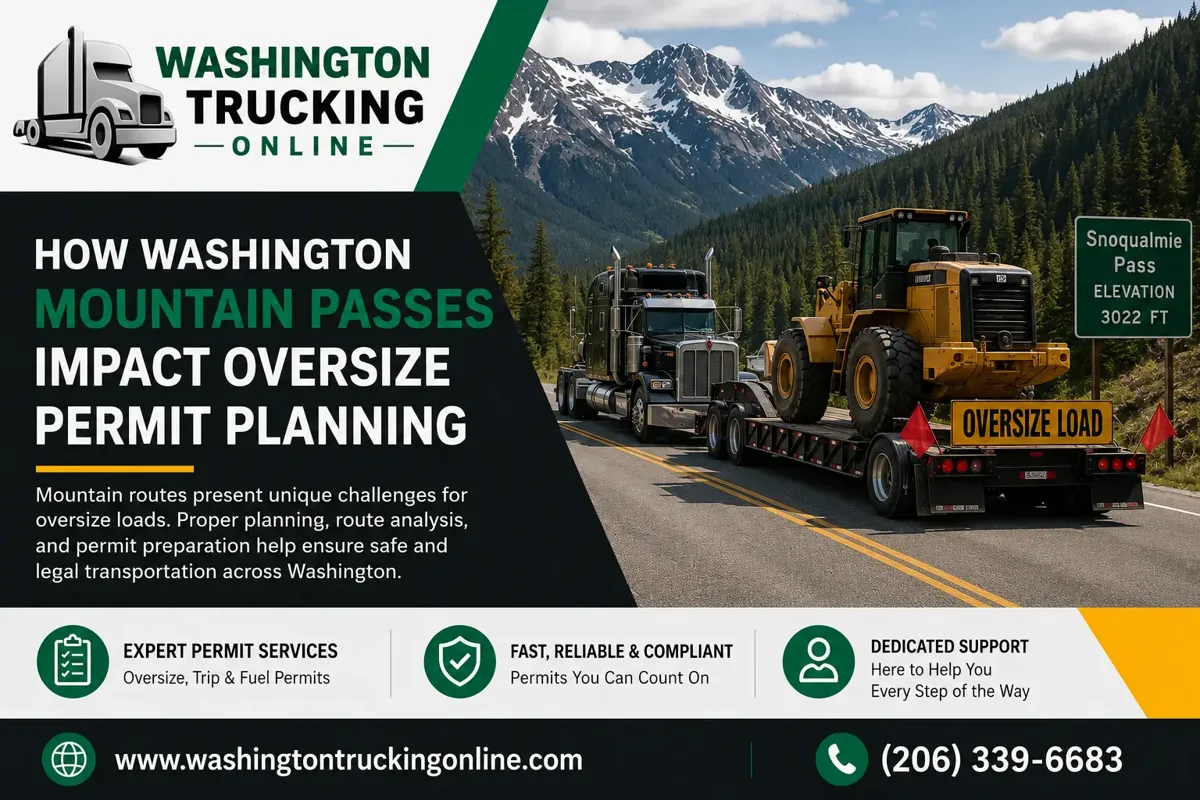
Washington's mountain passes play a critical role in commercial transportation throughout the state. For carriers moving oversize loads, these routes can present unique challenges that require careful planning before a permit application is submitted.
Understanding how mountain passes affect oversize permit planning can help trucking companies avoid delays, improve safety, and ensure compliance with Washington State regulations.
Why Mountain Passes Create Additional Challenges
Unlike flat highway corridors, mountain passes feature steep grades, sharp curves, changing weather conditions, and limited maneuvering space. These factors can make it more difficult to transport large equipment, construction machinery, or other oversize loads safely.
Washington's major mountain passes often experience seasonal weather changes that can impact travel conditions throughout the year. Even during warmer months, unexpected conditions may influence route availability and permit requirements.
Route Selection Becomes More Important
When applying for a Washington oversize permit, route planning is one of the most important steps. A route that appears suitable on a map may contain physical restrictions that prevent safe passage of an oversize load.
Mountain passes may include:
-
Narrow travel lanes
-
Reduced shoulder space
-
Bridge restrictions
-
Sharp turns
-
Height limitations
-
Temporary construction zones
Careful route analysis helps carriers identify potential obstacles before a trip begins and reduces the risk of unexpected delays.
Weather Conditions Can Affect Permit Travel
Weather is a major consideration when transporting oversize loads through mountain regions. Rain, snow, fog, ice, and high winds can create hazardous driving conditions and may impact permitted travel schedules.
Carriers should monitor forecasts closely and remain prepared for route adjustments if conditions change. Proper planning helps reduce safety risks and improves the likelihood of a successful transport.
Pilot Car Requirements May Increase
Certain oversize loads traveling through mountain passes may require pilot cars or escort vehicles. These requirements help improve visibility, assist with traffic management, and enhance overall roadway safety.
The need for escorts depends on factors such as load dimensions, route characteristics, and specific permit conditions. Understanding these requirements in advance helps carriers coordinate transportation more efficiently.
Why Many Trucking Companies Choose Our Service
Many trucking companies rely on Washington Trucking Online for assistance with Washington oversize permits.
Our team helps carriers navigate permit requirements, identify potential routing concerns, and obtain the permits needed for legal transportation throughout the state.
By simplifying the permit process, we help trucking companies save time and stay focused on their operations.
Final Thoughts
Washington mountain passes can significantly influence oversize permit planning. Factors such as route restrictions, weather conditions, roadway geometry, and escort requirements all play an important role in determining how an oversize load can travel safely and legally. Proper preparation and permit planning can help trucking companies move loads more efficiently while minimizing delays and compliance issues.
For more information, visit the Washington State Department of Transportation (WSDOT).