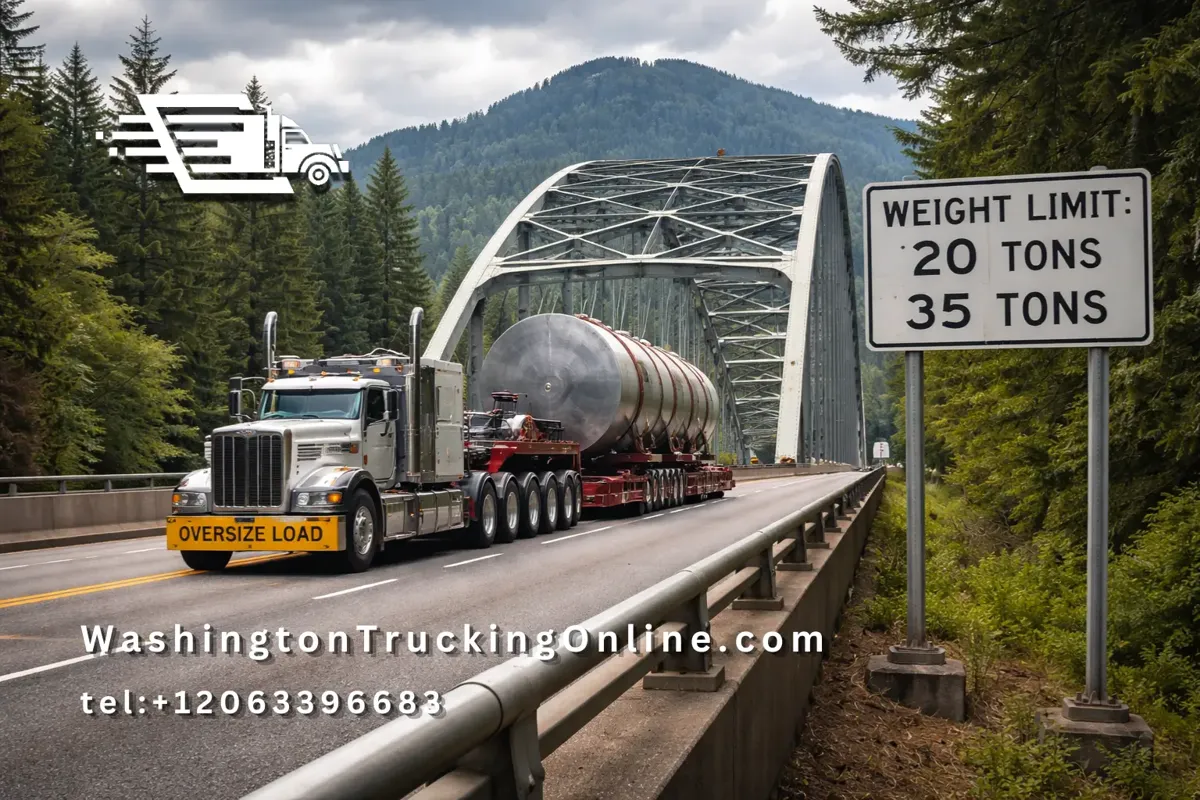
Bridge restrictions are vital in WSDOT permit reviews. Heavy haulers must understand these limits, as they impact approval speed, route choices, and efficiency.
Why Bridge Restrictions Matter For Trucking Companies
WSDOT focuses on bridge capacity during permit reviews. Each bridge's load rating depends on structure, age, and design. Exceeding limits results in rejection or additional engineering analysis.
Missing bridge factors early can cause route failure for heavy haulers. Overlooking these leads to delays, added costs, or sudden route changes.
How Bridge Analysis Affects Permit Approval
For overweight or superload permits, WSDOT analyzes bridges along routes. This step adds time to approval.
In some cases, WSDOT may:
- Require reduced speeds over certain bridges.
- Mandate specific lane positioning.
- Assign an entirely different route.
These changes protect bridges and maintain safety.
Common Mistakes Trucking Companies Make
Many trucking companies run into issues because they:
- Assume all highways support heavy loads.
- They overlook how axle spacing affects bridge stress.
- They submit routes without checking bridge ratings.
These mistakes often cause rejections or costly delays that planning can avoid.
How To Plan Bridge-Compliant Routes
To avoid setbacks, trucking companies should:
- Review bridge data before submitting permits.
- Optimize axle configurations to spread weight.
- Prepare backup routes in advance.
These steps reduce approval time and improve operations.
Why Many Trucking Companies Choose Our Service
Trucking companies trust Washington Trucking Online because we remove guesswork from WSDOT permit planning. Our team knows bridge restrictions, route compliance, and permit needs.
Instead of risking delays, companies rely on us for accurate route planning, compliance with WSDOT regulations, and faster approvals. This keeps them focused on deliveries while we manage the details.
Bridge restrictions, often overlooked, greatly impact success. Prioritizing compliant routes means faster approvals, fewer delays, and more reliable Washington operations.