Types of Permits
-
Single-Trip Permits – For one-time moves of non-divisible loads (e.g., large machinery, construction beams).
-
Continuous/Annual Permits – Allow frequent transport of similar OS/OW loads within a set period (usually one year).
-
Special Motor Vehicle Permits – For vehicles exceeding size or weight limits due to design (e.g., cranes, drill rigs).
-
Superload Permits – Required for extremely large loads that exceed standard permit limits, often involving route surveys and escort vehicles.
Size & Weight Thresholds
-
Width: Over 8 feet 6 inches
-
Height: Over 14 feet
-
Length: Over 53 feet (for trailers)
-
Weight: Over 80,000 pounds gross vehicle weight (or axle limits per WSDOT guidelines)
If any of these thresholds are exceeded, a permit is mandatory before travel.
Application Process
-
Apply Online: Through www.washingtontruckingonline.com
-
Provide: Vehicle details, axle weights, route, and load description.
-
Processing Time: Simple permits may be issued instantly; complex superloads require engineering review.
-
Fees: Based on trip type, distance, and vehicle weight class.
Escort and Pilot Car Requirements
Certain oversized loads need escort or pilot vehicles:
-
Front and rear escorts for extreme width/length.
-
Police escorts for highly complex or urban moves.
-
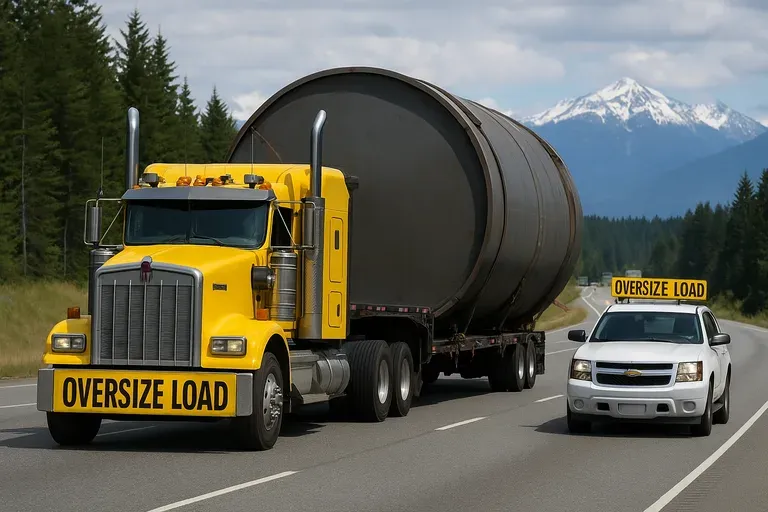
Escort vehicles ensure safe navigation through intersections, bridges, and narrow roads.
Route Restrictions & Conditions
-
Travel is often restricted during peak traffic hours or nighttime.
-
Bridge and overpass clearances must be verified before travel.
-
Weather conditions (especially in winter passes) can affect permit validity.
-
Drivers must carry the permit in the vehicle at all times.
Penalties for Non-Compliance
Operating without a valid OS/OW permit can lead to:
-
Heavy fines
-
Vehicle impoundment
-
Liability for infrastructure damage
-
Potential suspension of operating authority in Washington
Best Practices
-
Plan routes in advance using WSDOT’s Bridge Clearance Map and Permit Routing Tool.
-
Communicate with local jurisdictions if traveling through cities.
-
Inspect loads and secure cargo properly to prevent shifts or overhang issues.
-
Stay updated with seasonal travel restrictions (e.g., frost laws, weight limits).
Conclusion
Washington’s permitting system for oversized and overweight loads is designed to balance economic efficiency with public safety and infrastructure protection. Trucking companies that understand and follow these regulations can ensure smooth, legal, and safe transportation of large freight across the state.