Apply for a trip and fuel permits at https://www.washingtontruckingonline.com/
What Are Seasonal Weight Restrictions?
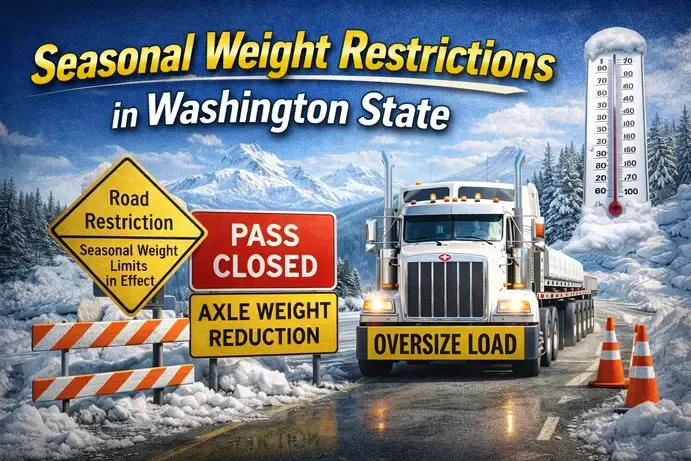
Seasonal weight restrictions are temporary reductions to legal axle or gross vehicle weight limits. In Washington, these restrictions are most commonly enforced when roadbeds weaken due to:
-
Freezing and thawing conditions
-
Excess moisture from rain or snowmelt
-
Spring breakup periods
During these times, roads are more susceptible to damage from heavy vehicles.
When Do Seasonal Weight Restrictions Apply in Washington?
Washington does not enforce a single statewide seasonal restriction period. Instead:
-
Restrictions are implemented regionally
-
Timing varies by county, route, and weather conditions
-
Most restrictions occur during late winter and early spring
Washington State Department of Transportation (WSDOT) announces restrictions as conditions change, and they may be lifted or extended depending on roadway stability.
Roads Most Commonly Affected
Seasonal weight restrictions typically apply to:
-
State highways with weaker pavement structures
-
Secondary highways
-
Rural and low-volume roads
-
Roads with thin asphalt or gravel bases
Major interstates are less likely to be restricted, but certain ramps or connectors may still be affected.
How Seasonal Restrictions Affect Trucking Permits
1. Reduced Allowable Weights
Even with a valid oversize or overweight permit, reduced weight limits may override permit allowances during seasonal restrictions.
2. Permit Denials or Modifications
WSDOT may:
-
Deny overweight permit requests
-
Require load reductions
-
Mandate alternate routes
-
Limit axle weight instead of gross weight
3. Route-Specific Limitations
Permits may only be valid on approved routes that are not under seasonal restriction.
Typical Weight Reductions
While exact limits vary, seasonal reductions may include:
-
Lower single-axle weight limits
-
Reduced tandem or tridem axle weights
-
Caps on total gross vehicle weight
These limits are posted through roadside signage or communicated through WSDOT permit systems.
Are There Any Exemptions?
Some vehicles may qualify for limited exemptions, including:
-
Emergency vehicles
-
Utility repair vehicles
-
Certain agricultural operations (depending on route and timing)
However, most commercial freight is not exempt, even if the load is time-sensitive.
Penalties for Violating Seasonal Weight Restrictions
Operating over posted seasonal limits can result in:
-
Fines and citations
-
Permit revocation
-
Forced offloading or rerouting
-
Increased scrutiny on future permit applications
Ignorance of seasonal restrictions is not considered a valid defense.
Best Practices for Staying Compliant
-
Check restrictions daily during late winter and early spring
-
Confirm that your permitted route is unrestricted
-
Work with a permit service familiar with Washington regulations
-
Plan alternate routes in advance
-
Reduce load weight when necessary to maintain compliance
How a Permit Service Can Help
Professional permit services monitor:
-
Active seasonal restrictions
-
Route-specific weight limits
-
Permit eligibility during restricted periods
They can help you adjust loads, secure proper routing, and avoid last-minute permit denials.
Final Thoughts
Seasonal weight restrictions in Washington State can significantly impact trucking operations—especially for overweight and heavy haul carriers. Planning ahead, staying informed, and understanding how these restrictions interact with permits is essential for safe and compliant operations.
If you frequently haul heavy loads through Washington, proactive planning during seasonal restriction periods can save time, money, and operational headaches.