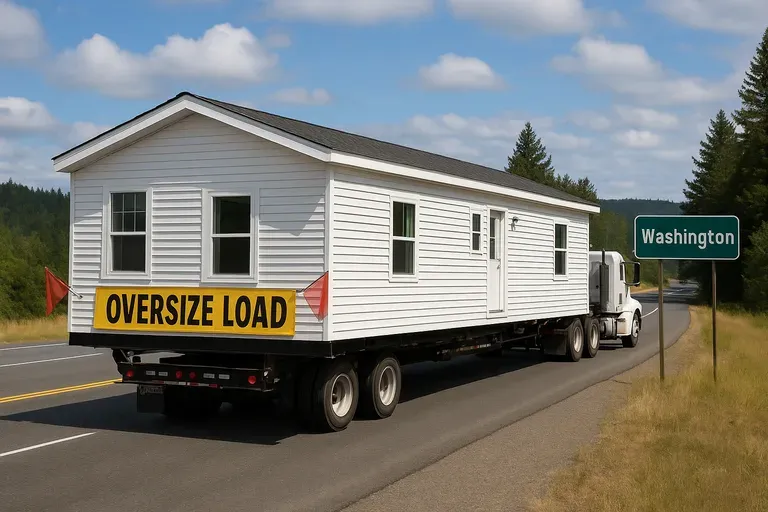
What Is a Manufactured Home or Modular Building Transport?
Manufactured homes and modular buildings are pre-constructed housing units or structures that must be transported from a manufacturing facility or storage yard to their installation site.
Because these units often exceed standard size and weight limits, special movement permits are mandatory for compliance with state transportation laws.
Permit Types and When They’re Needed
-
Single-Trip Permit
-
Required for one-time moves of a manufactured home or modular unit.
-
Valid for three consecutive days unless otherwise specified.
-
-
Annual Permit
-
Allows repeated movements of modular building sections within a calendar year.
-
Ideal for carriers who transport similar-sized modular units frequently.
-
-
Escort or Pilot Car Permits
-
Needed when the size of the building exceeds certain dimensions, requiring traffic escorts to ensure safety.
-
Legal Dimensions and Weight Limits
The following general limits apply unless additional authorization is obtained:
| Parameter | Standard Limit | Permit Required Beyond |
|---|---|---|
| Width | 8 feet 6 inches | Over 8’6” |
| Height | 14 feet | Over 14’ |
| Length (single section) | 75 feet | Over 75’ |
| Gross Weight | 80,000 lbs | Over 80,000 lbs |
Manufactured homes can easily exceed these dimensions, especially in width (often 12–16 feet), making special permits essential.
Route Approval and Restrictions
Before a move, WSDOT evaluates your proposed route to check for:
-
Bridge clearances
-
Road width and geometry
-
Construction zones
-
Seasonal or weather-related restrictions
If approved, the permit includes a designated route that must be strictly followed. Some roads may prohibit travel during rush hours or at night, depending on location and traffic volume.
Escort and Safety Requirements
Depending on width and route complexity:
-
One or two pilot/escort cars may be required.
-
Amber warning lights, “Oversize Load” banners, and flags must be displayed.
-
Police escorts may be mandated for extremely large or challenging moves.
Documentation and Application Process
You’ll need:
-
Valid USDOT number or Washington intrastate authority
-
Vehicle registration and insurance
-
Load description and exact dimensions
-
Origin and destination details
-
Preferred route
Apply online through the www.washingtontruckingonline.com. Most permits can be processed within 1–2 business days.
Fees and Costs
Typical fees:
-
Single-trip permit: Around $140–$300 depending on route and vehicle type
-
Annual permit: Around $700–$1000
-
Escort permits: Additional fees apply per escort vehicle
Fees may vary if local jurisdictions (cities or counties) require additional permits.
Compliance Tips
-
Always carry a copy of the permit during transport.
-
Verify bridge heights and route limits before departure.
-
Maintain proper insurance coverage for both the load and vehicle.
-
Check weather forecasts — high winds can delay wide-load moves.
Key Takeaway
Moving manufactured homes or modular buildings in Washington isn’t just about having the right truck — it’s about meeting strict safety and permitting requirements. Properly obtained and followed special movement permits protect drivers, the public, and state infrastructure while keeping your operation compliant with WSDOT laws.