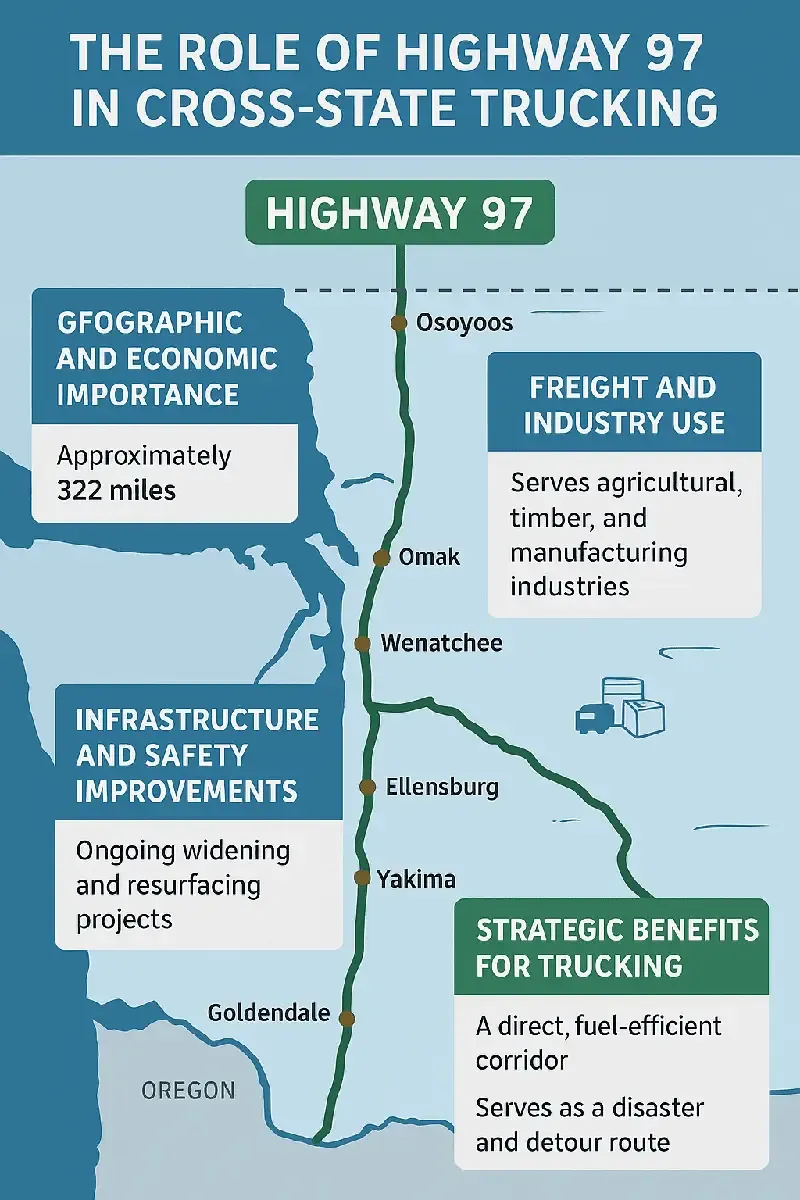
Geographic and Economic Importance
-
Length in Washington: Approximately 322 miles.
-
Connects major regions including Goldendale, Yakima, Ellensburg, Wenatchee, and Omak.
-
Links agricultural hubs in central Washington to export terminals and processing centers.
-
Acts as an alternative route to I-5, reducing congestion on western corridors while still connecting to major interstates like I-82 and I-90.
-
Facilitates cross-border trucking between British Columbia and the U.S. Pacific Northwest.
Freight and Industry Use
-
Serves as a major route for agricultural and food freight, including apples, hops, wine, and wheat.
-
Supports timber and manufacturing industries in central and northern Washington.
-
Used heavily by regional carriers and independent owner-operators transporting goods to and from Canada, Oregon, and California.
-
Connects to rail hubs and distribution centers in Yakima and Wenatchee.
Infrastructure and Safety Improvements
-
Ongoing widening and resurfacing projects by the Washington State Department of Transportation (WSDOT) to enhance freight mobility.
-
Safety upgrades in steep and winding segments, particularly near Satus Pass and Blewett Pass.
-
Enhanced rest areas and truck parking along the corridor for long-haul drivers.
-
Plans to improve border crossing efficiency at Oroville–Osoyoos.
Strategic Benefits for Trucking
-
Provides a direct, fuel-efficient corridor for north–south freight movement.
-
Reduces travel time and emissions compared to more congested routes.
-
Serves as a disaster and detour route when I-5 or I-90 experience closures due to weather or maintenance.
-
Strengthens trade and logistics integration with Canada, supporting the regional economy.
Conclusion
Highway 97 is more than a regional road — it’s a strategic commercial trucking lifeline connecting Washington’s heartland industries with the broader North American supply chain. Continuous investment in its infrastructure ensures it remains a vital route for freight efficiency, trade growth, and trucking safety.