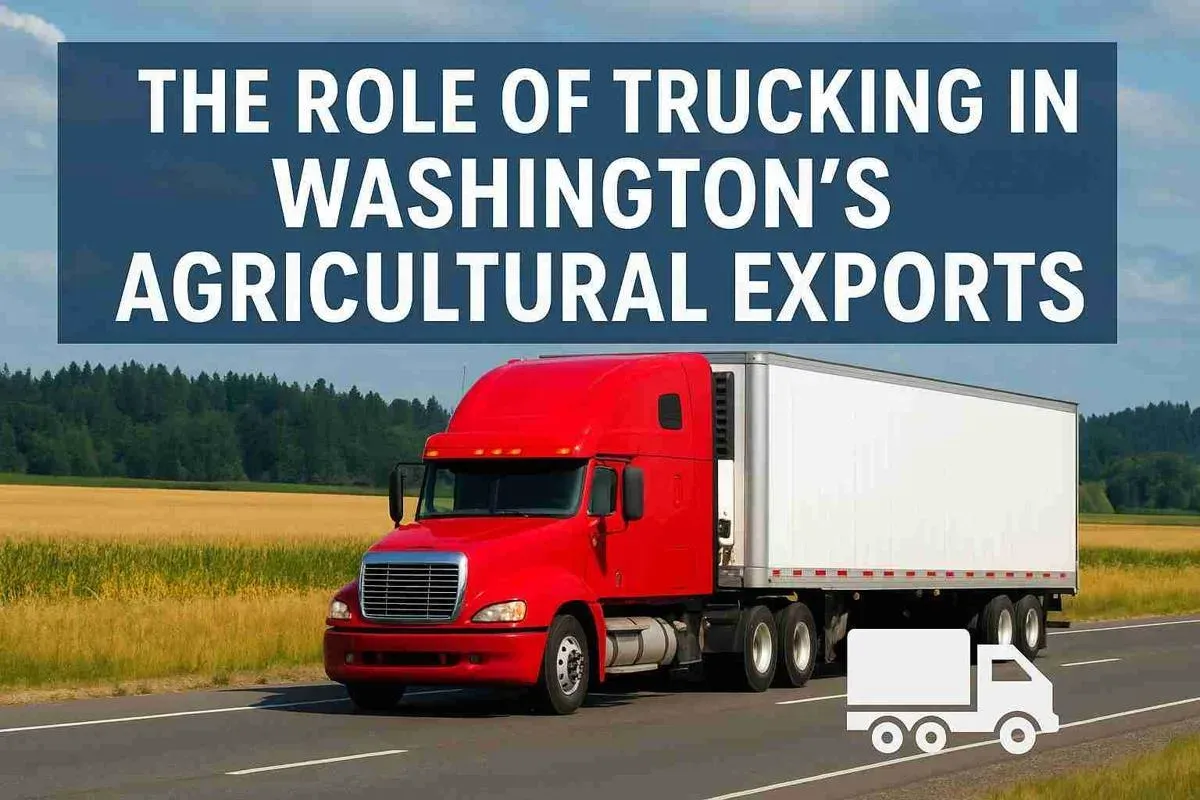
-
In 2023–2024, Washington-grown or processed food & agricultural exports were about $7.5-7.6 billion.
-
A large proportion of important crops are exported:
-
Wheat — up to 90% of the annual Washington crop is exported.
-
Potatoes (especially frozen French fries) — ~70% goes into export markets.
-
Fruit: Apples (~30% of apple crop), cherries (~25%) are exported.
-
-
Ports and export infrastructure are hugely important. Washington has many ports, substantial “pass-through” of agriculture goods from other states via Washington ports, and strong transport infrastructure (roads, highways, Columbia-Snake waterway system) to move goods.
The Role of Trucking in That System
Trucking serves multiple critical roles in Washington’s agricultural export chain:
-
First Mile / Farm to Processor / Cooler / Packing Facility
• Transport from harvest fields to processing plants, fruit packing sheds, cold storage. Agricultural products are perishable, so speed and temperature control are essential.
• For example, apples, sweet cherries, and asparagus need quick transportation from orchards to packing and refrigeration. -
Intermodal Moves: To Ports or Distribution Hubs
• Once processed or packed, many products are trucked to export terminals, container yards, or rail intermodal facilities.
• Coastal ports (Seattle, Tacoma, Longview, etc.) are endpoints for many of these trucking routes. -
Feeder Routes / In-state & Interstate Transport
• Some products are moved from Eastern Washington (where much of the grain, wheat, fruit, etc., are produced) to ports on the western side via highways and sometimes combined with river barge / rail shipments. Trucking is critical to bridge distances and gaps where other transport modes aren’t available.
• Example: The Columbia-Snake River system is crucial for transporting grain, but trucking connects farms to the river system or to terminals. -
Cold Chain and Specialized Transport
• Many agricultural exports require refrigerated trucks (reefers) to maintain freshness. Fruit, seafood, processed vegetables, dairy, etc., need temperature control.
• Special handling equipment, packaging, and oversight are required to avoid spoilage. -
Export Timing and Just-in-Time Logistics
• Harvest, storage capacity, and shipping schedules must align. Delays in trucking (road issues, driver shortages, regulatory holdups) can cost freshness, market price, and contracts. -
Flexibility & Resilience
• Trucking allows flexibility to reroute when ports are congested, or when weather/events disrupt other modes (rail, barge).
• During disruptions (e.g. port shutdowns, rail strikes), trucking often fills the gap, though at higher cost.