1. Legal / Regulatory Framework
-
Under RCW 46.32.010, the Washington State Patrol (WSP) is empowered to operate inspection stations for commercial motor vehicles, buses, etc., and designate when & where inspections are to be done.
-
They may inspect vehicles both while operating on public highways and at fixed inspection stations.
-
If a vehicle is found to be unsafe or deficient in required equipment, the State Patrol can place it out of service, and may withhold or revoke registration/plates until it meets safety requirements.
2. Weigh Stations & Electronic Screening
Washington has been modernizing the weigh/inspection process using electronic and virtual systems. Key components:
-
Weigh station e-screening: This uses transponders, cameras, weigh-in-motion (WIM) scales, over-height detectors, automated license plate readers, etc., to screen commercial vehicles in motion before they even enter a weigh station.
-
There are currently about 11 physical electronic screening locations + 3 virtual weigh-in-motion (VWIM) sites in Washington State.
-
The electronic screening system identifies potential violations (e.g. overweight, registration, credential issues, safety rating) and decides whether a vehicle may bypass the weigh station or must pull in for more inspection.
3. Inspection / Weigh Station Procedures for Drivers
Here’s what a driver or carrier should expect when approaching a weigh or inspection station in Washington:
-
Signs & Notification
-
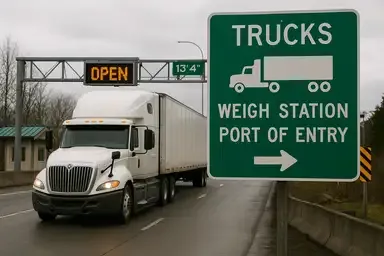
When a weigh station is open, there are roadside signs indicating whether trucks are required to enter. Sometimes the signs are dynamic, tied to the electronic screening system.
-
If there is a transponder or plate-based screening system, green lights or messages may show that you can bypass, red that you must enter.
-
-
Entering the Scale / Inspection Area
-
If routed in, the truck will pull onto the scale (WIM or static). The weigh station personnel will check weight (gross, axle, etc.), vehicle equipment, credentials, driver qualifications, hours of service (where applicable).
-
If the vehicle is being physically inspected, things like brakes, lights, tires, safety equipment, load securement may be checked.
-
-
Inspection Outcomes
-
If everything is in compliance, the driver is cleared and can continue on.
-
If violations are found (overweight, defective equipment, invalid credentials, HOS violations, etc.), options include fines, being placed out of service, having to fix issues before proceeding.
-
Sometimes a vehicle can be allowed to move under specific restrictions to repair facilities.
-
-
Bypass / Waiver / Electronic Clearance
-
For trucks equipped with transponders or participating in electronic screening, bypassing weigh stations is possible if the system shows they are compliant.
-
Virtual weigh-in-motion sites allow enforcement to monitor trucks in motion and selectively call in vehicles for inspection.
-
4. Recent and Ongoing Upgrades & Trends
-
Washington is upgrading many weigh stations to include electronic screening and virtual systems. Some stations are being rebuilt or enhanced, e.g. Plymouth Port of Entry (I-82 over the Columbia River) is being rebuilt with new scale pits, inspection bays, etc.
-
There are plans to build an additional weigh station / facility for I-90 (eastbound near Cle Elum) to cover gaps in inspection capability.
-
The state also installed a “Tire Anomaly and Classification System (TACS)” at many ports of entry. This helps detect underinflated or mismatched tires without stopping trucks if possible.
5. Common Challenges & Driver Considerations
-
Staffing: Some weigh/inspection stations are not always fully staffed, which can lead to closures or delays. Drivers may approach and find weigh stations open only part of the time.
-
Wait Times & Congestion: During peak traffic (e.g. at major ports, trade corridors), lines can form, especially if many trucks are routed in. Electronic bypass helps but only for compliant carriers.
-
Compliance Complexity: Keeping all credentials up to date (registration, safety ratings, transponders, driver logs, inspection certificates) is critical. A small fault (e.g. tire, light) can trigger a stop.
-
Overweight / Overdimensional Permits: If a vehicle is overweight or over-size and doesn’t have the proper permits, it can be cited. Permit rules must be followed carefully.
6. Summary for Best Practices
If you operate or drive commercial vehicles in Washington, here are some tips to make inspection/weigh station encounters smoother:
-
Equip your vehicles with a transponder if possible and enroll in any available electronic screening / pre-clearing programs.
-
Always carry up-to-date paperwork: driver license, vehicle registration, safety ratings, proof of insurance.
-
Maintain vehicle equipment well: lights, brakes, tires, load securement. Prevent defects that will lead to being placed out of service.
-
Monitor signs ahead of weigh stations: know in advance whether the station is open and whether your route will require you to enter.
-
Be aware of gross vehicle weight limits, axle limits, and ensure loads are balanced and within legal limits.