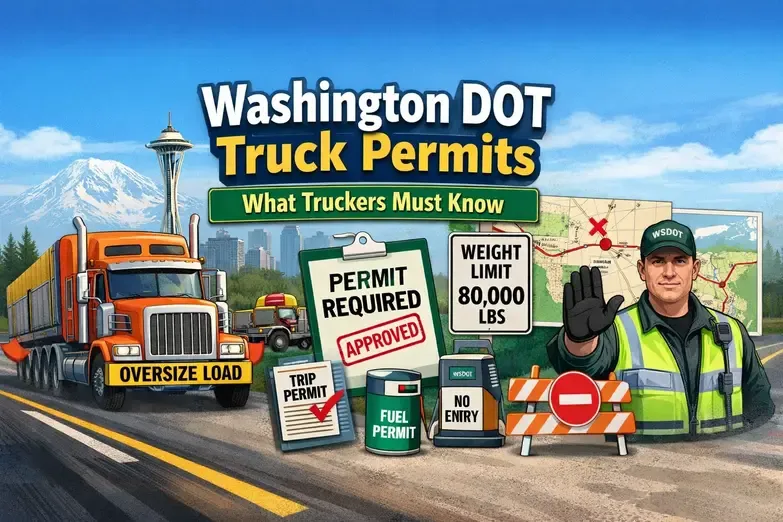
What Are Washington DOT Truck Permits?
Washington DOT truck permits are state-issued authorizations that allow commercial vehicles to operate legally when they do not meet standard registration, size, weight, or tax requirements.
These permits are commonly required for:
-
Out-of-state carriers
-
Trucks without IRP registration
-
Vehicles not compliant with IFTA
-
Oversize or overweight loads
-
Temporary or short-term operations in Washington
Who Needs a Washington DOT Truck Permit?
You may need a Washington DOT permit if your truck:
-
Is registered outside Washington and operating in the state
-
Does not have IRP (International Registration Plan) plates
-
Is not enrolled in IFTA
-
Exceeds legal weight, height, width, or length limits
-
Is hauling oversize, overweight, or superloads
-
Is operating temporarily or intermittently in Washington
Washington enforces permit compliance through weigh stations, roadside inspections, and port-of-entry checks.
Common Types of Washington DOT Truck Permits
1. Washington Trip Permit
A Washington trip permit allows out-of-state carriers to operate temporarily without IRP registration.
-
Typically valid for 3 consecutive days
-
Required for qualifying commercial vehicles
-
Not a replacement for permanent registration
2. Washington Oversize & Overweight Permits
Issued for loads exceeding Washington’s legal limits:
-
Width over 8′6″
-
Height over 14 feet
-
Length over 75 feet (combination vehicles)
-
Weight over 80,000 lbs
These permits may include:
-
Approved travel routes
-
Time-of-day travel restrictions
-
Escort vehicle requirements
-
Bridge and infrastructure limitations
3. Washington Temporary Registration Permits
Temporary permits may be issued when a truck is:
-
Newly purchased
-
Awaiting permanent registration
-
Being moved for inspection, repair, or sale
These permits are short-term and must be properly displayed at all times.
4. Washington Fuel Tax & Weight Compliance
Washington requires compliance with:
-
IFTA for fuel tax reporting
-
IRP for apportioned registration
-
State weight fees based on declared gross weight
Temporary permits may be required if a truck is not fully compliant.
5. Specialty & Industry-Specific Permits
Washington also issues permits for:
-
Logging and timber hauling
-
Construction and heavy equipment transport
-
Agricultural and farm vehicles
-
Hazardous materials transport
-
Superloads requiring engineering review
How to Apply for Washington DOT Truck Permits
Washington truck permits can be obtained through:
-
State online systems
-
Authorized permit services
-
Third-party trucking permit agencies
You’ll typically need:
-
USDOT number
-
Vehicle and trailer details
-
Axle weights and dimensions
-
Route information
-
Carrier contact details
Oversize and superload permits may require advance notice and additional approvals.
Washington DOT Permit Costs & Processing Time
-
Trip permits: Low cost, often issued same day
-
Oversize/overweight permits: Fees vary by load size, weight, and distance
-
Superloads: Higher fees and longer approval times
Processing times range from minutes to several business days, depending on permit complexity.
Penalties for Not Having Proper Washington DOT Permits
Failure to comply with Washington permit requirements can result in:
-
Fines and citations
-
Out-of-service orders
-
Forced route changes or load adjustments
-
Delays and lost revenue
-
DOT compliance issues affecting safety scores
Tips to Stay Compliant in Washington
-
Verify IRP and IFTA compliance before entering the state
-
Confirm load dimensions and axle weights
-
Carry digital or printed permits
-
Follow approved routes exactly
-
Track permit expiration dates carefully
Final Thoughts
Washington DOT truck permits are essential for legal trucking operations. Whether you’re hauling freight across the state or passing through, having the correct Washington permits keeps your business moving and protects you from costly enforcement actions.
Understanding permit requirements ahead of time helps ensure smooth, compliant operations throughout Washington State.