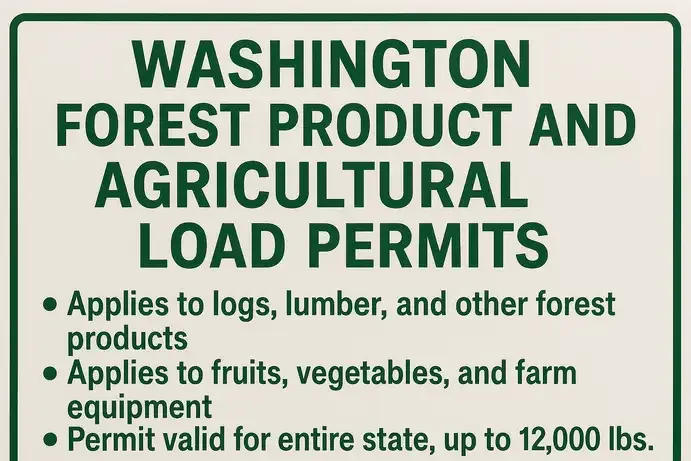
What They Cover
-
“Forest products” here include a variety of items defined as Specialized Forest Products (SFP) under Washington law. These can be (among others) cedar and other specialty woods, evergreen boughs/foliage, wild-harvested mushrooms or huckleberries, non-nursery Christmas trees or native shrubs, bark (e.g. cascara), salvage wood, cedar logs/chunks/burls/slabs, and similar natural forest materials.
-
The term “forest products” does not generally include large timber, sawlogs, poles/pilings, or major logs for commercial timber harvest — those are subject to a different permit regime.
When a Permit is Required
You need a permit under these circumstances:
-
If harvesting or transporting any specialized forest products (as defined) from any forest land — even your own property — unless the products are exempt (see below).
-
If harvesting standing or downed timber (for sale), or harvesting more than a threshold amount for personal use (commonly more than 5,000 board feet), then you must get a broader permit under the state forest practices rules.
If only small amounts of minor forest products — and no commercial intent — are involved, sometimes no permit may be required. But this depends heavily on what is being harvested, amount, and landowner permissions.
Types of Permits
-
Specialized Forest Products Permit — issued typically via the local county sheriff’s office or relevant authority. This covers harvesting/transporting items like Christmas trees, shrubs, foliage, certain wood salvage, bark, mushrooms, etc.
-
Forest Practices Application/Notification (FPA/N) — required when harvesting or selling substantial volumes of timber (or more than 5,000 board feet for personal use) from private or state-managed forestland. This triggers stricter regulation because larger-scale harvesting can impact water quality, wildlife, habitat, roads, and broader forest ecosystem management.
Legal framework & compliance
-
The relevant legal code is RCW 76.48 — the statute that governs specialized forest products. It defines what qualifies as SFP, what counts as “transportation,” “specialty wood,” and the permit/transport requirements.
-
If you transport SFP, you must carry a valid permit — or a “true copy” of it (with required signatures) if the law allows.
-
Violating the permit requirements (harvesting/transporting without permit, falsified documents, etc.) is a crime under state law and can lead to fines or jail time.
Agricultural / Oversize / Overweight Load Permits — For Transporting Large Loads
If the forest or agricultural load you’re transporting is big, heavy, or otherwise exceeds standard legal limits for trucks/trailers on public roads, you also need a separate permit from WSDOT. This is particularly relevant for commercial hauling (e.g., logs, timber loads, heavy equipment, large forestry/agricultural machinery).
How WSDOT Handles These Permits
-
The standard legal limits for vehicles/trailers on Washington roads are: about 8′6″ wide, 14′ tall, 53′ trailer length (or 75′ overall for truck + trailer), and standard axle/weight limits.
-
If your load exceeds legal dimensions or weights (or is non-divisible in a way that it cannot be broken down), you must get an Oversize / Overweight Load Permit before traveling.
-
In many cases — especially for standard loads or loads within near-legal limits — permittees can use WSDOT’s online self-issuing system (for “size and weight” permits), available 24/7 via their permit portal.
-
For extreme loads (“superloads” — e.g. very heavy, very long, wide) or complex transports, additional requirements may apply: route approvals, possibly escorts/oversize signage, time-of-day travel restrictions, bridge & clearance checks, and sometimes advance engineering review.
Relevance for Forest/ Agricultural Loads
If you harvest forest products or agricultural products (e.g. logs, timber, bulky harvests) and plan to transport them on public roads — especially if the load is large or heavy — you must ensure both:
-
You have the proper harvesting/transport permit under the forest-product regulations (SFP permit or FPA/N, as applicable).
-
The vehicle/load meets legal road-transport limits or you get a transport/oversize/overweight permit from WSDOT (if exceeding limits).
Sometimes both regimes apply (harvesting permit and transport permit), depending on the type and volume of forest/agri products and how they are transported.
Why These Permits Exist — Purpose & Policy
-
The forest-product permit system helps regulate harvesting of natural forest materials to avoid over-harvesting, ensure sustainability, and protect environmentally sensitive areas (wildlife habitat, watercourses, biodiversity).
-
The transport/oversize/overweight permit system (via WSDOT) is designed to keep public roads and bridges safe, avoid damage from heavy or oversized loads, manage traffic impacts, and ensure compliance with structural limits of road infrastructure.
-
Together, the combined system balances commercial / harvesting interests with environmental protection, public safety, and infrastructure integrity.
What You Should Do (if you plan to harvest or transport)
-
Before harvesting any forest product (wood, foliage, mushrooms, etc.) — check whether it qualifies as “specialized forest product” or larger timber/forest harvest. If yes: get the appropriate permit (SFP permit or FPA/N).
-
Always get landowner permission (whether private land or public/state-managed). Even on private land, the permit requirement can apply.
-
If transporting logs or forest/agricultural materials on public roads — check the size/weight of your vehicle and load. If it exceeds legal limits, apply for WSDOT oversize/overweight permit.
-
For bulky or heavy loads (especially non-divisible, very large, or requiring special routing) — plan ahead: you may need special reviews, escorts, and specific route/bridge clearance approval.
-
Always carry the required documents (permit, or true copy, or load tickets / sales invoice if applicable) when transporting forest products to show to law enforcement.