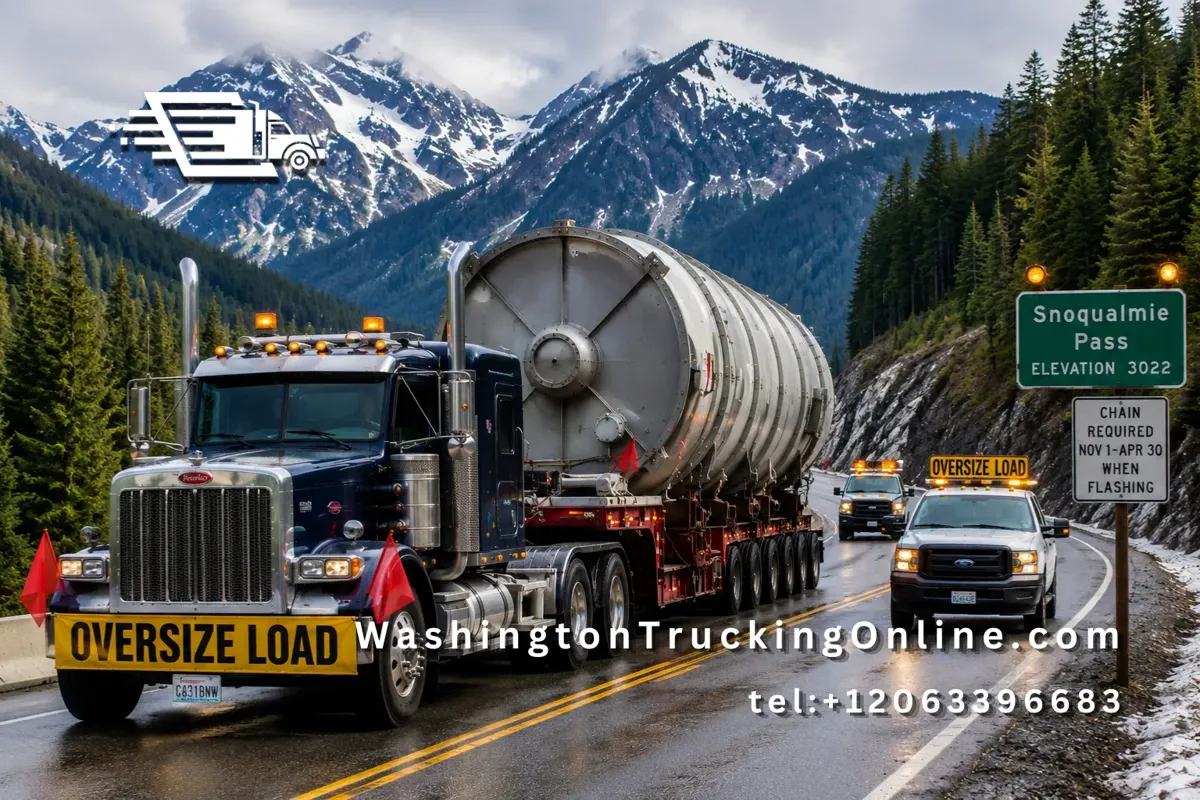
Transporting oversize loads through Washington’s mountain passes demands more than just securing a permit. Carriers must prepare for steep grades, changing weather conditions, seasonal restrictions, and route-specific regulations that can quickly delay a trip if they overlook details. Understanding Washington's overly burdensome permit requirements for mountain pass travel helps carriers avoid compliance issues and costly downtime.
Mountain Pass Travel Requires Careful Route Planning
Washington mountain passes, such as Snoqualmie, Stevens, and White Pass, present unique challenges for oversize or overweight loads. Narrow lanes, sharp curves, elevation changes, and winter weather can affect whether a load is approved for travel.
The Washington State Department of Transportation restricts movement during severe weather, chain requirements, or heavy traffic periods. Some routes limit travel windows for oversize loads due to construction activity or seasonal road conditions.
Before moving through mountain corridors, carriers should verify:
- Height clearances along the approved route
- Bridge and roadway weight limitations
- Pilot car requirements
- Weather-related travel restrictions
- Approved travel times for oversize loads
- Temporary closures or construction zones
Missing even one requirement can delay permits or force rerouting.
Weather Conditions Can Impact Permit Approval
Mountain weather in Washington changes rapidly, especially during the fall and winter months. Snow, fog, ice, and high winds often disrupt the movement of oversize loads across elevated highways.
WSDOT sometimes suspends oversize travel during dangerous driving conditions. Carriers who do not check the latest weather risk fines, delays, or unsafe travel situations.
Many trucking companies underestimate how the weather impacts permit planning. Loads that appear compliant on paper may still face movement restrictions due to road safety concerns in mountain regions.
Escort And Safety Requirements Are Often Stricter
Mountain pass routes often require extra safety precautions for oversize loads. Based on load dimensions, carriers may need the following:
- Front and rear escort vehicles
- Specific lighting and warning signage
- Reduced travel speeds
- Daylight-only movement restrictions
- Additional spacing requirements between vehicles
Failing to follow escort regulations leads to permit violations and enforcement penalties.
Why Trucking Companies Choose Our Service
Many trucking companies rely on Washington Trucking Online because permit errors cause costly delays in mountain corridors, where rerouting options remain limited. At Washington Trucking Online, we help carriers avoid those problems by processing permit applications accurately and efficiently.
Our team understands Washington's oversized permit requirements, mountain pass restrictions, route limitations, and seasonal travel conditions. We secure the right permits quickly for trucking companies, ensuring loads move safely and stay compliant.
Truckers and trucking companies choose Washington Trucking Online because we provide:
- Fast permit processing
- Accurate routing support
- Reliable customer service
- Knowledge of Washington permit regulations
- Assistance with oversize, trip, and fuel permits
When oversize loads must cross Washington mountain passes, proper permit preparation determines whether you complete a smooth trip or face costly delays.