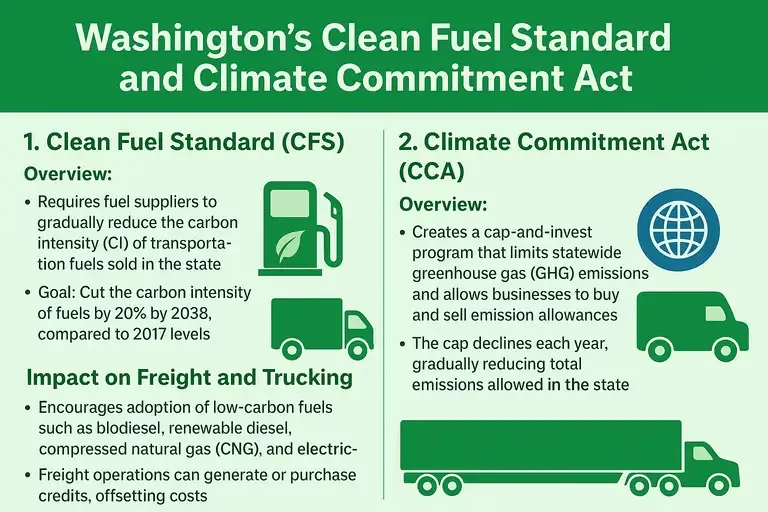
Washington’s Clean Fuel Standard and Climate Commitment Act
1. Clean Fuel Standard (CFS)
Overview:
-
Implemented by the Washington Department of Ecology in 2023, the Clean Fuel Standard (CFS) requires fuel suppliers to gradually reduce the carbon intensity (CI) of transportation fuels sold in the state.
-
The goal is to cut the carbon intensity of fuels by 20% by 2038, compared to 2017 levels.
Impact on Freight and Trucking:
-
Encourages adoption of low-carbon fuels such as biodiesel, renewable diesel, compressed natural gas (CNG), and electricity.
-
Trucking companies that switch to these cleaner fuels can generate or purchase credits under the CFS program, offsetting costs.
-
Electric freight fleets (e.g., delivery vans or short-haul trucks) earn credits, which can be sold to fossil fuel suppliers to help fund further electrification.
-
Promotes fuel diversification and investment in clean infrastructure, such as renewable diesel blending facilities and EV charging stations for heavy-duty vehicles.
Freight Example:
-
Several fleets in Western Washington (e.g., near Tacoma and Kent Valley) are beginning to replace diesel drayage trucks with electric or renewable diesel-powered units to reduce emissions and operating costs over time.
2. Climate Commitment Act (CCA)
Overview:
-
Passed in 2021, the CCA creates a cap-and-invest program—a market-based system that limits statewide greenhouse gas (GHG) emissions and allows businesses to buy and sell emission allowances.
-
The cap declines each year, gradually reducing total emissions allowed in the state.
Impact on Freight and Trucking:
-
Fuel distributors and other large emitters must purchase carbon allowances, which raises the cost of fossil fuels, incentivizing efficiency and cleaner alternatives.
-
Revenue from allowance auctions funds transportation decarbonization projects, including:
-
Zero-emission truck and bus grants
-
EV charging and hydrogen fueling infrastructure
-
Port electrification and clean drayage programs at Seattle and Tacoma ports
-
-
Freight operators that transition early to cleaner technologies can reduce compliance costs and benefit from state incentive programs funded by CCA revenues.
3. Combined Benefits for Freight Operations
-
Lower Emissions: Reduced particulate matter, CO₂, and NOx from truck fleets improve air quality in freight-heavy corridors.
-
Economic Incentives: Access to state grants, tax credits, and carbon credits helps offset the cost of new vehicles and equipment.
-
Infrastructure Expansion: Growing network of electric truck chargers and alternative fuel stations (biodiesel, hydrogen, renewable natural gas).
-
Industry Leadership: Washington is positioning itself as a West Coast leader in sustainable freight, aligning with similar initiatives in California and Oregon.
In Summary
The Clean Fuel Standard pushes the freight sector toward cleaner fuels, while the Climate Commitment Act uses market-based incentives and revenue reinvestment to speed the transition. Together, they create a policy framework that makes low-emission freight operations both environmentally and economically viable across Washington State.