Key Facts & Structure
Facilities & Types
-
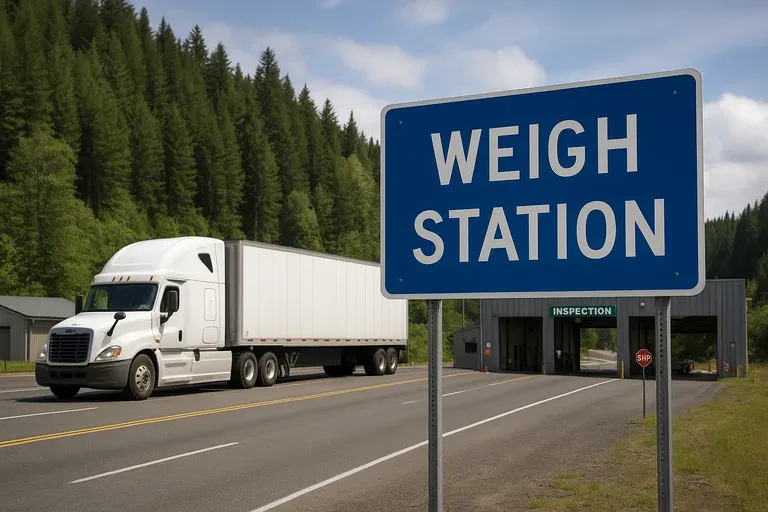
Washington uses a mix of fixed inspection stations (often called weigh stations or ports of entry), virtual/Weigh-in-Motion (WIM) sites, and mobile roadside enforcement.
-
According to a report: about 59 inspection stations in total (though 4 were closed at that time).
-
Of those: ~12 fixed sites with electronic screening, ~40 fixed without e-screen, ~11 mobile sites (per one older document).
-
The state has 48 permanent‐scale weigh stations (in one inventory) with 17 on interstate highways.
Electronic Screening / Bypass Technology
-
The Washington State Department of Transportation (WSDOT) and the Washington State Patrol (WSP) have implemented “e-screening” (transponder, license plate, weigh-in-motion) to allow compliant carriers to bypass the station.
-
Example: WSDOT says there are 11 electronic screening weigh-stations plus 3 virtual weigh-in-motion sites.
-
WSP’s enforcement stats: In 2023, over 6.7 million commercial vehicles were identified & screened; over 1 million potential violations were flagged.
Why They Exist
-
The purpose: to enforce weight limits (protect pavements/bridges), vehicle safety, driver credentials, oversize/overweight permitting, credential compliance.
-
WSDOT/WSP state objectives: identify high-risk carriers, allow legal carriers to bypass, protect infrastructure and public safety.
What Truckers Should Know
When You Might Be Stopped
-
Commercial vehicles entering Washington (interstate freight) or traveling major corridors can be directed into a weigh/inspection station either manually or by e-screening.
-
Even if you have transponder or e-screening eligibility, you may still be pulled in if flagged for size/weight/safety issues.
-
Signs on highways will indicate when the station is open and whether trucks must exit.
Bypass Eligibility
-
If you have a transponder (registered with WSDOT), you may qualify for bypass at certain stations.
-
The screening checks things like weight/axle data (via weigh-in-motion), height, vehicle registration, safety rating, credentials.
-
If flagged, you’ll be directed to pull in for full inspection.
Truck Parking & Station Capacity
-
Some stations are also used for truck parking (though parking capacity is often limited). One 2016 report noted only 14 stations had designated truck parking, totaling 178 spaces.
-
Truck parking is also a factor when planning your route—especially along major freight corridors like I-5 and I-90.
Common Violations & Enforcement Focus
-
Overweight (gross/axle) is a top target.
-
Credential issues: expired registration, unsafe carrier safety ratings.
-
Tire anomalies: Washington has installed a Tire Anomaly and Classification System (TACS) to detect missing/mismatched/under-inflated tires at speed.
Notable Locations & Recent Upgrades
-
WSDOT lists a map of weigh stations with bypass/e-screening in Washington.
-
Upgrades: The 2023 “Gray Notebook” reports completion of 11 upgraded weigh stations + 4 virtual weigh-in-motion sites (for total ~15 electronic-screening capable locations).
-
Example: A new site near Gold Bar on US 2 was completed in 2022 to replace a legacy station.
Practical Tips for Trucking in Washington
-
Check ahead for whether the weigh station on your route is open (many have variable hours).
-
If you have a transponder or are enrolled in e-screening, ensure your credentials are current and accurate.
-
Even if you’re eligible for bypass, plan for a possibility of pull-in (carry paperwork, logs, etc).
-
Monitor truck parking availability especially around stations—if you get flagged and must stop, you may need a spot.
-
Be mindful of weight limits (gross/axle) especially when crossing bridges or mountain passes—Washington takes infrastructure protection seriously.
-
If you're heading east-west (like on I-90) or north towards the Canada border, know where fixed inspection stations are.