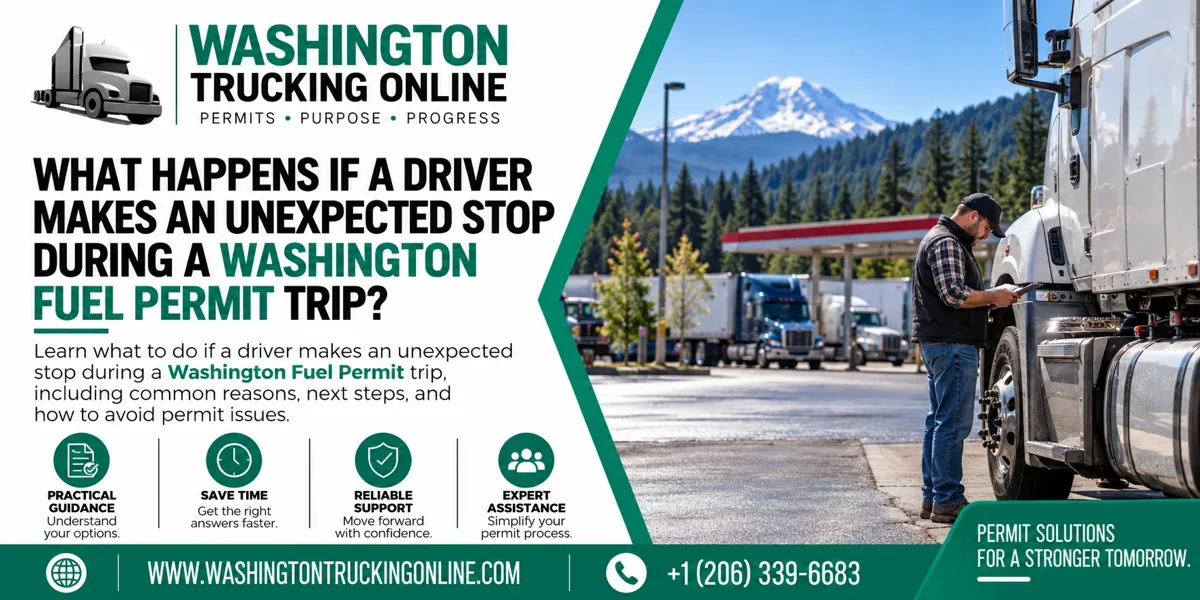
What Happens If A Driver Makes An Unexpected Stop During A Washington Fuel Permit Trip?
Table Of Contents
-
Introduction
-
Why An Unexpected Stop Can Matter
-
Common Reasons For An Unexpected Stop
-
What Should The Driver Do First?
-
Does A Stop Affect The Washington Fuel Permit?
-
What If The Stop Becomes An Overnight Stay?
-
What If The Stop Leads To A Route Change?
-
How To Prevent Problems
-
Common Mistakes To Avoid
-
Why Many Trucking Companies Choose Our Service
-
FAQ
Introduction
A driver traveling under a Washington Fuel Permit may sometimes need to make an unexpected stop before reaching the planned destination. Mechanical concerns, traffic conditions, driver needs, weather, or an emergency can interrupt a routine trip.
An unexpected stop does not automatically mean that the permit is no longer usable. However, the carrier should consider whether the stop changes any part of the planned movement, such as the route, vehicle, timing, or other permit information.
The safest approach is to notify dispatch, review the permit information, and make sure the trip continues consistently with the applicable authorization.
Why An Unexpected Stop Can Matter
A Washington Fuel Permit is associated with a temporary movement and the information used for that trip. A simple stop may not change the vehicle or overall trip, but a stop can sometimes lead to additional changes.
For example, a short stop for traffic or a driver need may have little effect on the trip. A longer stop caused by a breakdown, weather event, or customer issue may delay the trip and create questions about the schedule or route.
The important point is whether anything about the permitted movement changed because of the stop.
Common Reasons For An Unexpected Stop
A driver may need to stop because of a mechanical warning, a tire problem, severe weather, traffic congestion, or an emergency. The driver may also need to stop at a safe location because of fatigue or another operational concern.
The carrier should distinguish between a temporary pause and a stop that changes the overall plan.
What Should The Driver Do First?
The first priority is safety. The driver should stop in a safe and lawful location and address the immediate reason for the interruption.
Once the situation is under control, the driver should notify dispatch, especially when the stop may affect the route, timing, destination, or ability to continue the trip as planned.
Dispatch should review the current permit and determine whether the stop has created any additional issue that needs attention.
The driver should keep the Washington Fuel Permit and other trip documents available throughout the trip.
Does A Stop Affect The Washington Fuel Permit?
An unexpected stop by itself does not necessarily change the permit. If the same truck, trip, route, and other permit information remain unchanged, the carrier may simply be dealing with a temporary interruption.
If the stop results in a different route, different destination, vehicle replacement, or another significant change, those issues should be reviewed separately.
The driver should also avoid treating an unexpected stop as permission to make unrelated changes to the trip. The permit should continue to correspond with the movement actually being made.
What If The Stop Becomes An Overnight Stay?
A delay may become long enough that the driver needs to stop for the night.
In that situation, dispatch should review the expected continuation schedule and make sure the rest of the trip still aligns with the applicable permit information.
Before continuing the next day, the driver should confirm the destination, route, vehicle information, and other relevant trip details.
What If The Stop Leads To A Route Change?
A significant unexpected stop can sometimes result in a route change. A road may become unavailable, or another operational problem may require a new path.
If the route changes, the carrier should review the new route before the driver continues. Standard navigation should not be treated as a substitute for checking whether the revised trip still matches the permit information.
The carrier should also document the reason for the route change and keep the original permit and related records available.
How To Prevent Problems
The best way to manage unexpected stops is to have a clear communication process between drivers and dispatch.
Drivers should know when to report a stop and which information dispatch needs. Companies should keep permit records organized so the current Washington Fuel Permit can be reviewed quickly when a trip changes.
Dispatch should monitor major delays and determine whether they affect the planned route, destination, vehicle, or timing.
A trip-change checklist can help staff distinguish between a routine stop and a change that requires additional permit review.
Common Mistakes To Avoid
Ignoring A Significant Delay: A short stop may be routine, but a major delay should be communicated to dispatch.
Changing The Route Without Review: Do not assume every alternate route is automatically appropriate.
Failing To Keep The Permit Available: The driver should have access to the current permit and trip documents.
Treating A Stop As A New Authorization: A stop does not automatically authorize unrelated changes.
Forgetting To Update Dispatch: Communication helps the carrier respond before a small issue becomes a larger problem.
Continuing Without Reviewing New Trip Details: Check the permit again when the stop leads to a meaningful change.
Why Many Trucking Companies Choose Our Service
Many trucking companies choose Washington Trucking Online because unexpected trip interruptions can create permit questions when drivers need quick answers.
Our service provides online permit processing and practical permit support to help carriers manage Washington trucking requirements more conveniently.
When a driver makes an unexpected stop during a Washington Fuel Permit trip, having permit specialists available can help carriers review the changed circumstances, organize the trip information, and determine the appropriate next step before the driver continues.
FAQ
Does An Unexpected Stop Automatically Invalidate A Washington Fuel Permit?
No. A stop by itself does not necessarily invalidate the permit. The carrier should review whether anything else about the permitted movement changed.
Should The Driver Notify Dispatch About An Unexpected Stop?
Yes, especially when the stop may affect the route, timing, destination, vehicle, or ability to complete the trip as planned.
What If The Driver Stops Overnight?
Review the trip information before continuing the next day and make sure the current permit documentation still corresponds with the planned movement.
What If The Stop Causes A Route Change?
Review the alternate route before continuing and determine whether the change affects the permit or another part of the trip.
Should The Driver Keep The Washington Fuel Permit During The Stop?
Yes. Keep the permit and related trip documents accessible throughout the trip.
What If The Stop Happens Because Of A Mechanical Problem?
Address the safety issue first, notify dispatch, and review the permit and trip information before continuing with a replacement vehicle or changed route.
How Can Carriers Reduce Problems Caused By Unexpected Stops?
Maintain communication between drivers and dispatch, keep permit records organized, and review the trip whenever a stop leads to a significant change.
For more information, visit the Washington State Department of Licensing.