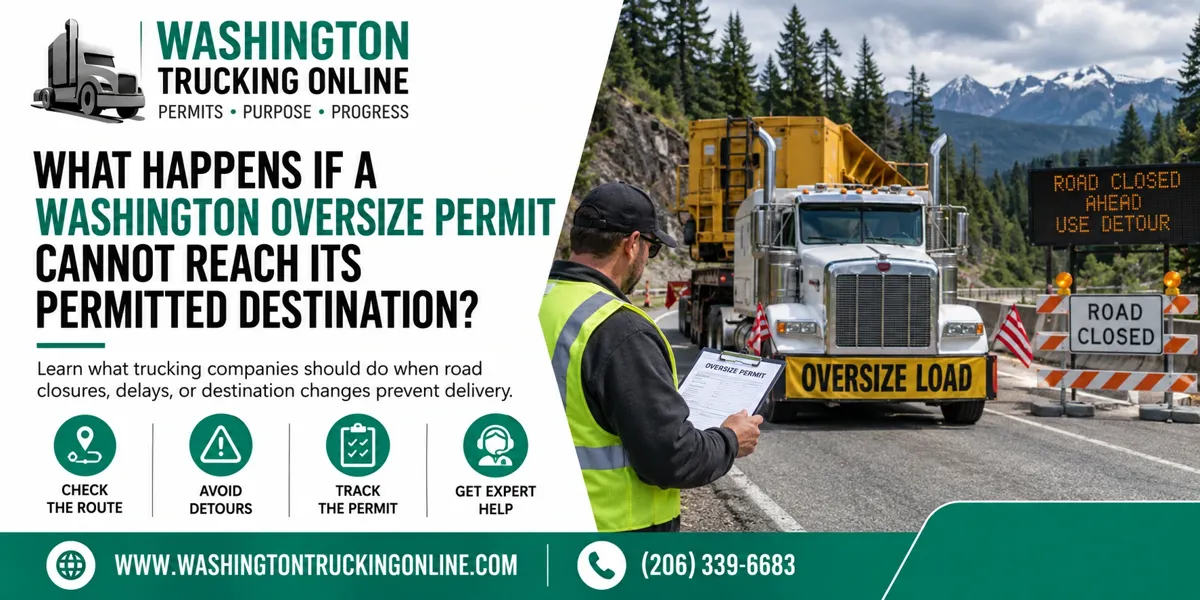
What Happens If A Washington Oversize Load Cannot Reach Its Permitted Destination?
Table Of Contents
-
Introduction
-
What Should The Driver Do First?
-
Why Is An Unplanned Detour A Problem?
-
What If A Road Closure Blocks The Route?
-
What If The Destination Changes?
-
What If The Truck Is Delayed?
-
What Information Should Dispatch Gather?
-
How Can Trucking Companies Prevent Destination Problems?
-
Why Many Trucking Companies Choose Our Service
-
FAQ
Introduction
An oversize load may begin its trip with an approved permit and planned route, but unexpected problems can make the listed destination difficult or impossible to reach. Road closures, construction, clearance issues, mechanical problems, weather, and customer changes can all affect a permitted movement.
When this happens, trucking companies should not assume that the existing Washington Oversize Permit automatically covers a different route or destination.
The carrier should first identify what has changed and review the permit conditions before continuing. Taking a few minutes to reassess the movement can help avoid an unnecessary compliance problem.
What Should The Driver Do First?
The driver should prioritize safety and avoid making an immediate detour simply to reach the destination.
The driver should contact dispatch and explain the problem, including the current location, road condition, and reason the destination cannot be reached.
Dispatch can then review the permit, the planned route, and the available options. The driver should keep the permit documents accessible and follow company instructions while the situation is being evaluated.
Why Is An Unplanned Detour A Problem?
An alternate road that works for a standard truck may not be appropriate for an oversize or overweight vehicle.
The detour could include a low bridge, restricted roadway, narrow section, weight limitation, construction zone, or another condition that was not considered when the original route was planned.
A navigation application can suggest another road, but GPS directions do not replace the route and conditions established for the permit.
Before using a different route, the carrier should determine whether it is suitable and whether additional authorization is necessary.
What If A Road Closure Blocks The Route?
A road closure can prevent a permitted load from reaching its destination even when the original permit remains valid.
If the route is blocked, the driver should notify dispatch and provide the location and details of the closure. Dispatch should then determine whether the route may reopen soon or whether another option needs to be considered.
If waiting is practical, delaying the movement may be preferable to taking an unapproved route.
The carrier should also consider how the delay affects the permit's authorized travel period. A longer delay can create a second issue if the movement extends beyond the permit dates.
What If The Destination Changes?
A customer may change a delivery location after the load is already on the road. For an oversize movement, this is more than a routine dispatch update.
A different destination can require a different route and may introduce new bridges, clearances, road restrictions, or local jurisdiction requirements.
Dispatch should review the new destination before instructing the driver to continue. The carrier should determine whether the existing Washington Oversize Permit still matches the planned movement or whether the new operation requires additional permitting or approval.
What If The Truck Is Delayed?
A mechanical problem, customer delay, weather event, or road closure can extend the trip.
A delay does not automatically mean the permit is no longer valid, but the carrier should monitor the authorized travel period closely.
If the revised schedule moves the delivery beyond the permit dates, dispatch should review the situation before the truck continues.
The earlier the carrier identifies a potential expiration problem, the more time it has to address the issue and avoid a last-minute decision on the road.
What Information Should Dispatch Gather?
When the driver cannot reach the permitted destination, dispatch should collect enough information to evaluate the situation.
Important details include:
-
Permit number
-
Current location
-
Original destination
-
Reason the destination cannot be reached
-
Current route
-
Proposed alternate route
-
Vehicle dimensions and weight
-
Road closure or restriction details
-
Expected delay
Having complete information makes it easier to determine whether the original permit still fits the movement.
How Can Trucking Companies Prevent Destination Problems?
Good preparation starts before the truck leaves.
The carrier should review the permitted route, verify vehicle dimensions and weight, check known restrictions, and make sure the driver has the necessary permit documents.
Dispatch should also keep route information available and establish a process for drivers to report unexpected problems immediately.
During the trip, drivers should communicate significant changes as soon as they occur. Early notification gives the carrier more time to evaluate the route before the truck reaches a blocked road or unsuitable detour.
Why Many Trucking Companies Choose Our Service
Many trucking companies choose Washington Trucking Online because oversize movements can become complicated when road conditions, customer instructions, or schedules change.
Our service helps simplify permit processing with fast processing, experienced permit specialists, secure online applications, and convenient customer support.
We help trucking companies prepare their Washington permit requirements and address permit questions when trip conditions change.
FAQ
Can A Washington Oversize Load Take A Different Route If The Original Route Is Blocked?
The carrier should not assume that an alternate route is automatically covered. The route should be reviewed before the vehicle proceeds.
What Should A Driver Do If The Destination Cannot Be Reached?
The driver should move to a safe location when practical, contact dispatch, and provide the location and reason for the problem.
Can GPS Choose The New Route?
GPS can identify possible roads, but it does not replace the route authorized by the Washington Oversize Permit or the carrier's responsibility to verify restrictions.
What If A Road Closure Causes A Major Delay?
Dispatch should review the permit's travel period and determine whether the movement can still be completed within the authorized dates.
What If The Customer Changes The Delivery Address?
The carrier should review the new destination and route before continuing because the change may affect the permit requirements.
What If The Alternate Route Uses A Local Road?
Local roads may involve requirements from the appropriate city or county. The carrier should verify the applicable local requirements before using the route.
How Can Dispatch Reduce These Problems?
Dispatch should review the route in advance, track permit dates, keep the permit documents accessible, and require drivers to report significant changes immediately.
For more information, visit the Washington State Department of Transportation.