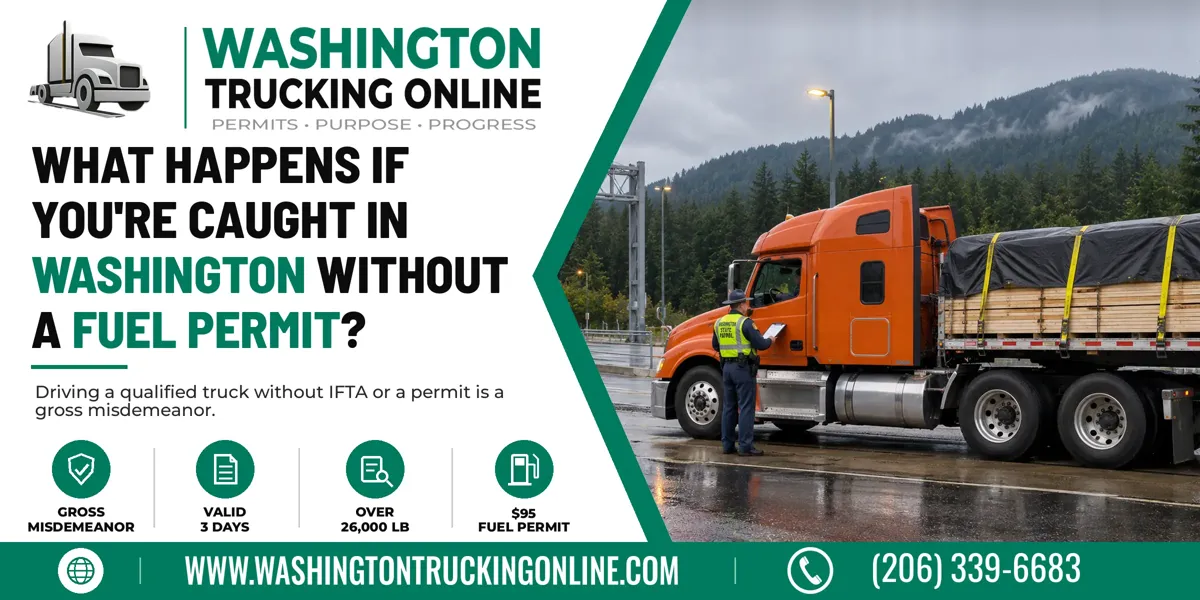
What Happens If You're Caught in Washington Without a Fuel Permit?
Table Of Contents
-
Introduction
-
The Short Answer
-
Who Needs the Permit in the First Place
-
Where Trucks Get Checked
-
What Happens at the Stop
-
The Legal Penalty
-
The Hidden Costs
-
Situations That Count as Having No Permit
-
How to Avoid Getting Caught Short
-
Common Mistakes to Avoid
-
Why Many Trucking Companies Choose Our Service
-
FAQ
Introduction
Washington sees heavy truck traffic every day on I-5, I-90 and I-82, and on the routes from the Oregon border, Idaho and British Columbia. Most of those trucks carry IFTA decals. The ones that don't need a Washington Fuel Permit before they cross the state line.
Sometimes a driver enters without one. The permit didn't arrive, the dates were wrong, or nobody realized the truck needed it. This guide explains what happens if you're caught in Washington without a Washington Fuel Permit, what the law says, and how to keep it from happening.
The Short Answer
Running a qualified truck in Washington without IFTA or a valid Washington Fuel Permit breaks the state's fuel tax law. Under RCW 82.38.100, a violation is a gross misdemeanor.
In practice, a driver who's caught can expect:
-
A citation for the violation,
-
A delay until the right credential is in place, and
-
Extra costs for the carrier, from lost time to missed loads.
Who Needs the Permit in the First Place
A Washington Fuel Permit is needed for a qualified motor vehicle without IFTA credentials. That means a power unit with:
-
Two axles and a gross or registered weight over 26,000 pounds,
-
Three or more axles, regardless of weight, or
-
A combination weighing over 26,000 pounds.
The permit is paid in lieu of the special fuel tax under RCW 46.17.400, and it's good for three consecutive days, beginning and ending on the dates printed on it.
Where Trucks Get Checked
Washington checks credentials in several places:
-
Ports of entry and weigh stations on I-5, I-90, I-82 and other major routes.
-
Roadside inspections by Washington State Patrol Commercial Vehicle Enforcement officers.
-
Border crossings from British Columbia, where trucks often stop for inspection soon after entering.
Officers check for IFTA decals and a license copy, or a valid Washington Fuel Permit for the truck.
What Happens at the Stop
When an officer finds a qualified truck with no IFTA and no valid permit, a few things usually follow:
-
The driver is cited. The violation is written up against the carrier and driver.
-
The truck may be held. The officer can require the truck to wait until the carrier obtains the right credential.
-
The carrier buys the permit. Once a valid Washington Fuel Permit is issued for the truck, it can usually continue.
How long the stop lasts depends on how fast the carrier can get the permit, which is why having a 24/7 permit service matters.
The Legal Penalty
Under RCW 82.38.100(2), a violation of the fuel permit rules is a gross misdemeanor. In Washington, a gross misdemeanor can carry a fine of up to $5,000 and up to 364 days in jail under RCW 9A.20.021. Those are maximums, and actual penalties depend on the case.
The same statute also says:
-
Altering a permit's dates, license number or VIN invalidates it.
-
Permits can't be issued to a carrier that owes Washington fuel taxes, penalties or interest.
The Hidden Costs
The citation is only part of the cost. A truck stopped without a Washington Fuel Permit can also mean:
-
Hours of downtime at a port of entry or on the shoulder.
-
Missed delivery windows and unhappy customers.
-
Hours-of-service time lost while the truck sits.
-
Rescheduled loads for the rest of the week.
For most carriers, the delay costs far more than the permit would have.
Situations That Count as Having No Permit
Some drivers think they're covered when they aren't. These usually count as having no valid permit:
-
The permit dates have ended. The three days are over.
-
The permit is for another truck. It's tied to one vehicle.
-
The permit was altered. Changed dates or numbers invalidate it.
-
The IFTA license expired. Old decals don't cover the trip.
-
The truck entered before the permit was issued. The permit doesn't cover earlier miles.
How to Avoid Getting Caught Short
A few habits keep trucks legal:
-
Check IFTA status before every Washington trip.
-
Order the Washington Fuel Permit before the truck reaches the state line.
-
Match the dates to the days the truck will actually be in Washington.
-
Confirm the plate and VIN on the permit.
-
Keep a copy in the cab.
-
Track the limit. Carriers can't rely on permits forever, and frequent runs call for IFTA.
Common Mistakes to Avoid
-
Assuming a trip permit covers fuel. Registration and fuel are separate permits.
-
Writing new dates on an old permit. That's a gross misdemeanor.
-
Ordering too late. A permit issued after entry doesn't cover earlier miles.
-
Using one permit for two trucks. Each truck needs its own.
-
Ignoring an unpaid fuel tax balance. It can block new permits.
Why Many Trucking Companies Choose Our Service
Washington Trucking Online gets your Washington Fuel Permit issued fast, day or night, so a truck isn't stuck at a port of entry waiting on paperwork.
-
Fuel permit: $95
-
Trip permit: $95
-
Oversize permit: $98
We provide support 24/7 and also work weekends and holidays.
or
FAQ
What happens if I'm caught in Washington without a fuel permit?
You can be cited, and the truck may be held until the carrier gets the right credential.
Is driving without a Washington Fuel Permit a crime?
Yes. A violation is a gross misdemeanor under RCW 82.38.100.
What is the maximum penalty?
A gross misdemeanor in Washington can carry up to $5,000 in fines and up to 364 days in jail.
Can I buy the permit after I'm stopped?
The carrier can get a permit so the truck can continue, but it doesn't erase the violation for miles already driven.
How long is a Washington Fuel Permit valid?
Three consecutive days, as shown on the permit.
For more information, visit the Washington State Department of Licensing.