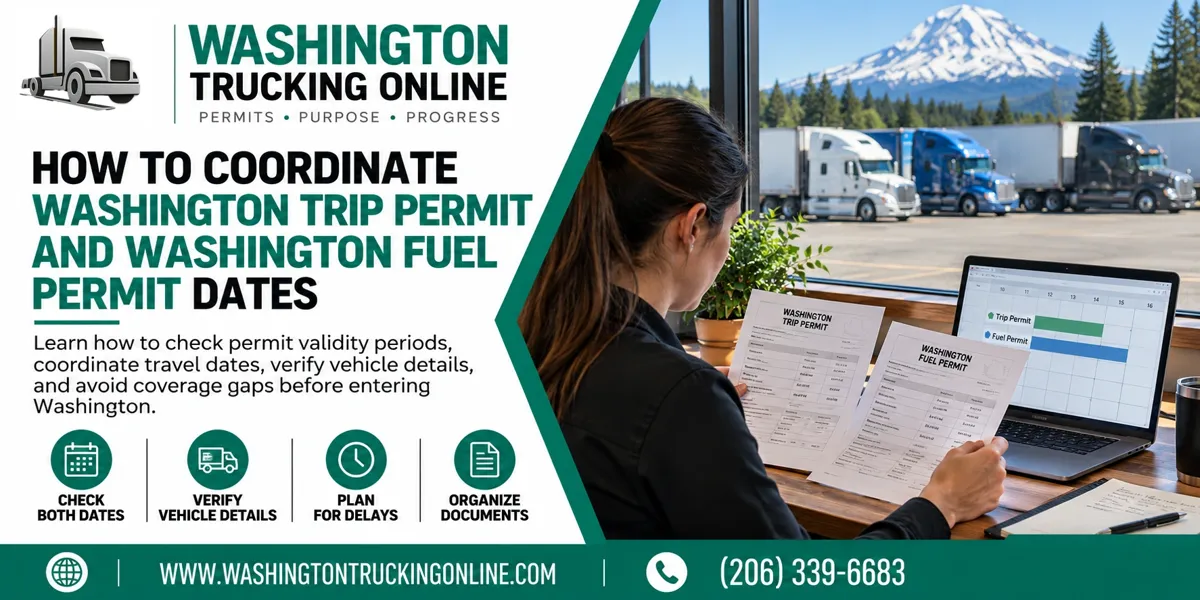
How To Coordinate Washington Trip Permit And Fuel Permit Dates When Both Are Required
Table Of Contents
-
Introduction
-
Understand What Each Permit Covers
-
Why The Dates Need To Be Coordinated
-
Confirm Which Permits The Vehicle Needs
-
Choose The Correct Travel Dates
-
Check Vehicle Details And Permit Information
-
What If The Permit Dates Do Not Match?
-
Review Both Permits Before Departure
-
What If The Travel Schedule Changes?
-
Keep Permit Records Organized
-
Common Mistakes To Avoid
-
Why Many Trucking Companies Choose Our Service
-
FAQ
Introduction
Carriers entering Washington may need both a Washington Trip Permit And a Washington Fuel Permit when their vehicles do not have the required permanent licensing or fuel-tax credentials. These permits serve different purposes, so arranging one does not automatically satisfy the other requirement.
Each permit is valid for a limited period. Check both against the planned schedule to help avoid coverage gaps and delays.
Understand What Each Permit Covers
A Washington Trip Permit provides temporary vehicle licensing for an eligible commercial vehicle operating in Washington. It is valid for three consecutive days, beginning with the first day of use.
A Washington Fuel Permit, also called a special fuel trip permit, addresses fuel-tax authorization for qualifying diesel- or propane-powered commercial vehicles not covered by the International Fuel Tax Agreement (IFTA). Eligibility depends on fuel type, axle count, weight, and tax credentials.
The permits are not interchangeable. Confirm which authorizations apply to the vehicle and trip before purchasing either document.
Why The Dates Need To Be Coordinated
When both permits are required, the planned Washington operation needs to fall within the valid period of each permit. Do not assume that buying both permits together guarantees matching dates or that one document extends the other.
A loading delay may shift the planned entry date. Recheck both permits against the revised schedule.
Confirm Which Permits The Vehicle Needs
Before choosing dates, check the vehicle's registration and fuel-tax status. A truck with valid permanent licensing or applicable IFTA credentials may have different requirements from a vehicle without them.
Review fuel type, axle configuration, weight, and tax credentials. If unclear, verify requirements with the Washington Department of Licensing or permit provider before dispatch.
Choose The Correct Travel Dates
Start with the date the truck is expected to begin operating in Washington. Then compare that schedule with the start and end dates required for each permit.
Allow time to review the documents before the truck reaches the state. Loading delays do not automatically extend a permit, so use each document's dates and instructions to confirm coverage.
Check Vehicle Details And Permit Information
Date coordination is only one part of the review. Make sure each permit identifies the correct vehicle and includes required information, such as the plate number or vehicle identification number where applicable.
Make sure the dates are readable and documents complete. Do not change dates or vehicle details yourself; resolve discrepancies through the issuing provider or state office.
What If The Permit Dates Do Not Match?
If the dates differ, compare each document with the intended schedule and verify whether both cover the trip.
If either permit does not cover the planned operation, contact the issuing provider or Washington agency before the vehicle operates. Do not alter the dates yourself or treat a payment receipt as a substitute for an issued permit.
Review Both Permits Before Departure
Before dispatch releases the truck, compare the Washington Trip Permit and Washington Fuel Permit side by side. Verify the vehicle information, validity dates, and conditions on each document.
Make sure the driver can access both permits so dispatch can resolve errors before the truck leaves the terminal.
What If The Travel Schedule Changes?
If a delay shifts the entry date, check both permits again. Purchasing them does not make the original dates valid for a new schedule.
If the revised schedule falls outside the stated validity period, ask the issuing provider or state agency what options are available. Temporary permits may have limits on corrections, exchanges, refunds, or credits, so checking dates before purchase and departure is important.
Keep Permit Records Organized
Keep copies of both permits with the trip records and note the vehicle, planned entry date, validity dates, and purchase confirmations. For fleets with several trucks, use a shared permit log and assign responsibility for checking documents before dispatch.
Organized records help prevent duplicate purchases and confusion about which permit applies to each vehicle.
Common Mistakes To Avoid
Assuming The Dates Automatically Match: Check the validity period on each document separately.
Relying Only On The Purchase Date: Verify the dates and instructions shown on the issued permits.
Ignoring A Schedule Change: Recheck coverage when the expected entry date moves.
Using One Permit In Place Of The Other: Confirm that every required authorization is in place.
Editing The Permit Yourself: Do not change dates or vehicle details on an issued document.
Waiting Until The Border: Check both permits before dispatch releases the truck.
Why Many Trucking Companies Choose Our Service
Many trucking companies choose Washington Trucking Online because temporary permit requirements can become time-consuming when vehicles, schedules, and documents must be coordinated.
We help carriers save time by simplifying permit processes, reducing paperwork issues, and assisting with permit information. Fast processing and dedicated customer support help companies organize documents and address questions before they cause delays.
FAQ
Do I Always Need Both A Washington Trip Permit And Washington Fuel Permit?
No. Requirements depend on the vehicle's licensing status, fuel type, weight, axle configuration, and applicable fuel-tax credentials.
Should The Dates On Both Permits Be Identical?
They should cover the intended operation when both are required. Verify the dates rather than assuming they automatically match.
What If The Dates Do Not Cover My Planned Entry?
Contact the issuing provider or Washington agency before the vehicle operates.
Can I Correct A Date By Hand?
Do not alter an issued permit yourself. Corrections can invalidate permit documents.
What Should I Check Before Departure?
Confirm vehicle details, validity dates, and eligibility, and that the driver can access both required documents.
How Can Fleets Prevent Date Errors?
Use a shared permit log, assign responsibility for document checks, and recheck permits when schedules change.
For more information, visit the Washington State Department of Licensing.