Get The Latest News, Advice & Best Practice From Blog
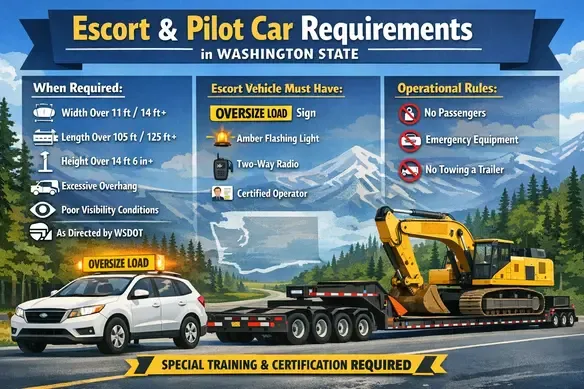
Escort and Pilot Car Requirements in Washington
Washington State requires escort (pilot) vehicles for certain oversize and overweight loads to improve safety, protect infrastructure, and manage traffic flow. These requirements are strictly enforced by WSDOT and the Washington State Patrol (WSP).
Jan. 23, 2026, 7:46 p.m.
Read more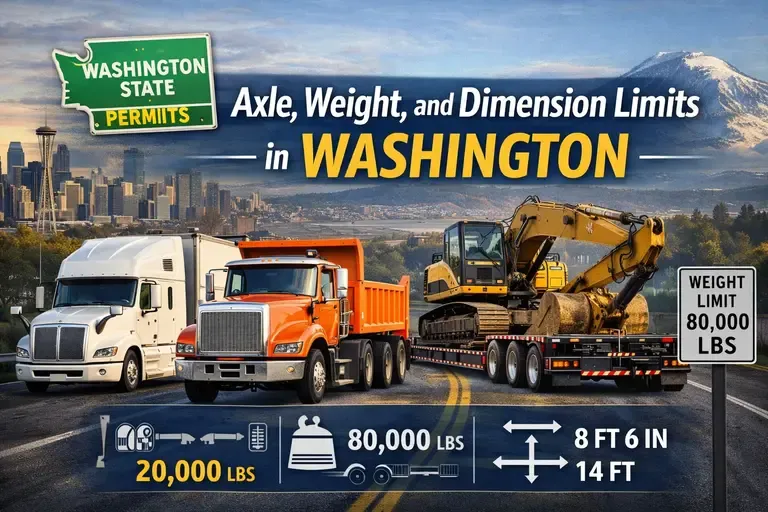
Axle, Weight, and Dimension Limits in Washington
Understanding axle, weight, and dimension limits in Washington State is essential for trucking companies, owner-operators, and heavy haul carriers. Operating outside legal limits without the proper permits can lead to fines, delays, and out-of-service orders. This guide explains Washington’s standard limits and when permits are required.
Jan. 21, 2026, 8:39 p.m.
Read more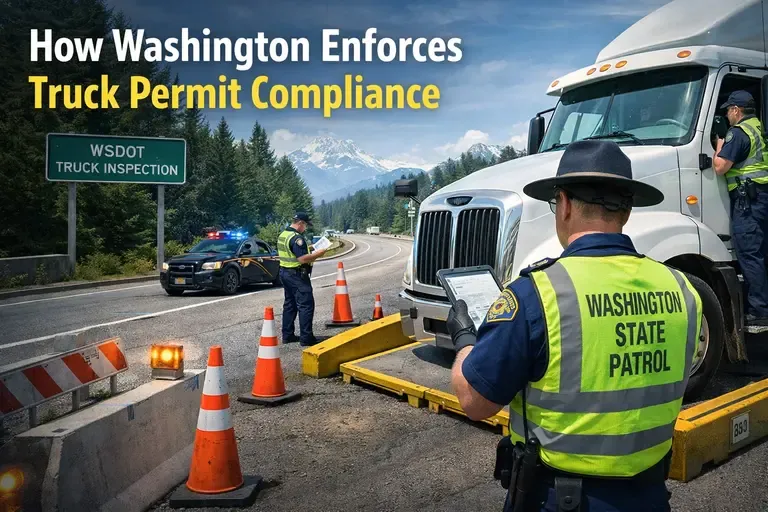
How Washington Enforces Truck Permit Compliance
Washington State is known for strict enforcement of trucking permits, especially for oversize and overweight vehicles. Compliance ensures road safety, protects bridges and infrastructure, and keeps deliveries on schedule. Enforcement is a combination of weigh stations, roadside inspections, escort requirements, and technology-driven monitoring.
Jan. 19, 2026, 11:57 a.m.
Read more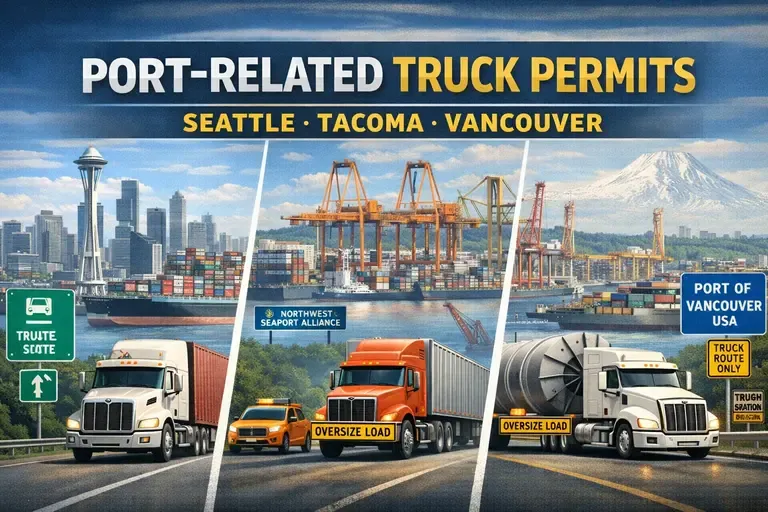
Port-Related Truck Permits (Seattle, Tacoma, Vancouver)
Washington’s major ports are critical freight hubs, but operating trucks in and out of them requires special permits, registrations, and compliance with multiple agencies. The ports of Seattle, Tacoma, and Vancouver (WA) each have unique rules that go beyond standard Washington State trucking permits.
Jan. 17, 2026, 5:55 p.m.
Read more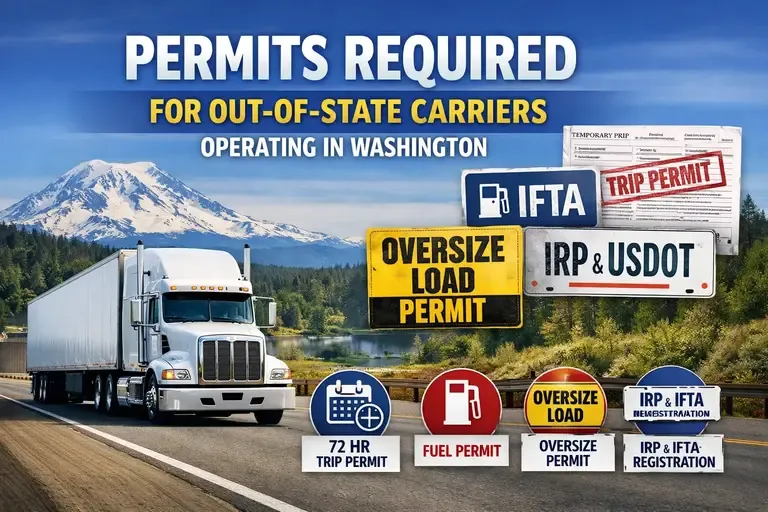
Permits Required for Out-of-State Carriers Operating in Washington
A short-term permit that lets an out-of-state commercial vehicle legally operate on Washington highways without full state registration (IRP). It’s intended for one-time trips, new vehicles awaiting registration, or carriers not based in Washington.
Jan. 15, 2026, 10:50 a.m.
Read more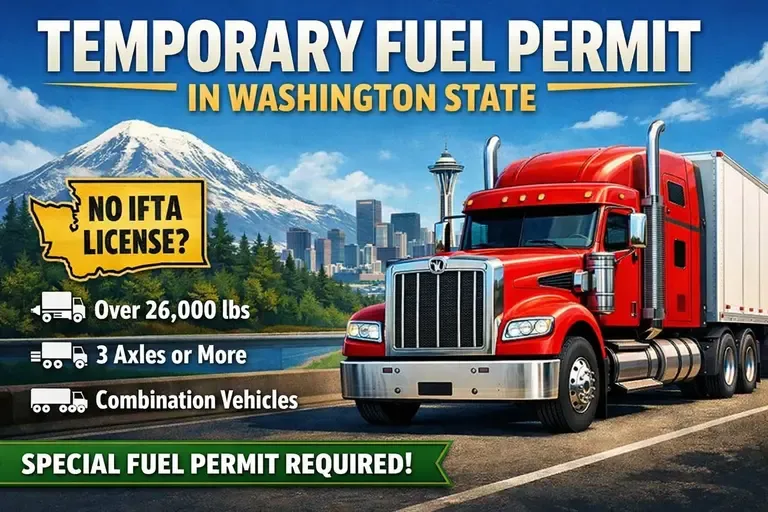
Do You Need a Fuel Permit Without IFTA in Washington?
In Washington State, most commercial motor carriers report fuel use through IFTA (International Fuel Tax Agreement). But some carriers do not have IFTA credentials and may be wondering if they still need a fuel permit to operate legally.
Jan. 13, 2026, 12:49 p.m.
Read more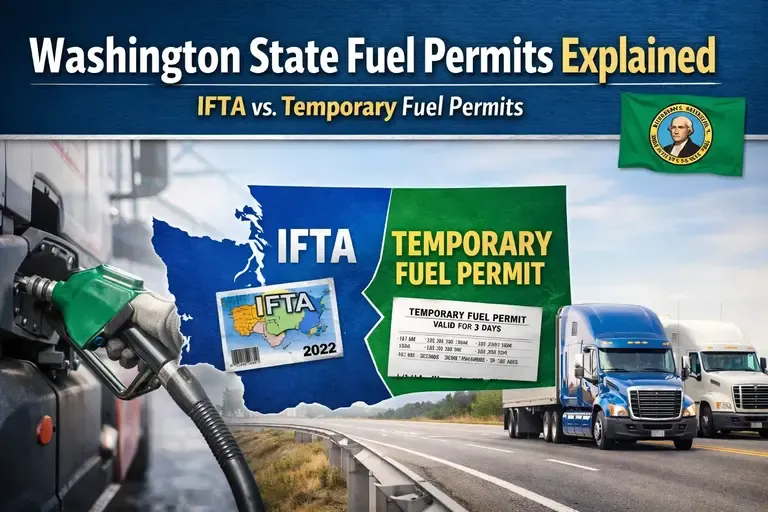
Washington State Fuel Permits Explained (IFTA vs Temporary Permits)
Operating a commercial vehicle in Washington State requires proper fuel tax compliance. Whether you need IFTA credentials or a temporary fuel permit depends on how often and where you operate.
Jan. 11, 2026, 12:58 p.m.
Read more
Hazardous Materials Transport Permits in Washington
Transporting hazardous materials (hazmat) in Washington State requires strict compliance with federal and state regulations. The Washington Department of Transportation (WSDOT) and other authorities closely monitor hazmat carriers to ensure public safety.
Jan. 9, 2026, 7:24 p.m.
Read more
Washington 3-Day Trip Permits-Rules Costs and Limits
A 3-Day Trip Permit (often just called a trip permit) allows a commercial vehicle to operate legally on Washington public highways for three consecutive days when it doesn’t have the appropriate state licensing or registered weight for the current load.
Jan. 7, 2026, 1:49 p.m.
Read more