Get The Latest News, Advice & Best Practice From Blog
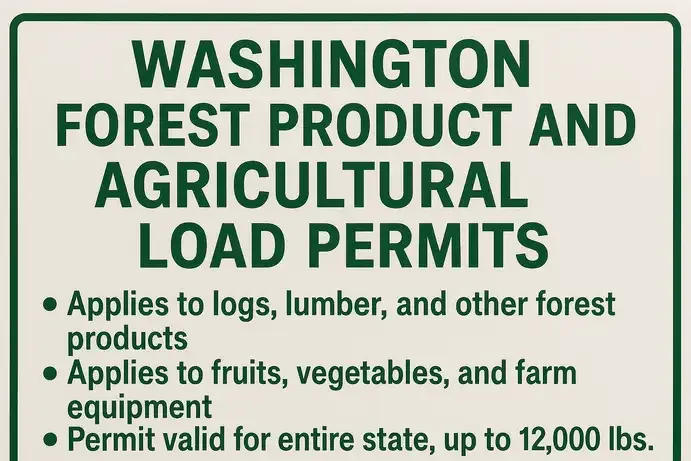
Washington Forest Product and Agricultural Load Permits
Forest Products Permits — Harvesting & Transporting Wood, Foliage, Specialty Forest Goods
Dec. 2, 2025, 6:39 a.m.
Read more
Does Washington Require a UCR Filing for Truckers?
Yes — in Unified Carrier Registration (UCR) requirements, if you operate under a USDOT number in Washington (or any other UCR-participating state) and you engage in interstate commerce, then you need to file UCR.
Dec. 1, 2025, 2:12 p.m.
Read more
Temporary Fuel Permits in Washington
Commercial carriers operating in Washington must comply with the state’s fuel tax requirements. If a vehicle enters Washington without an active International Fuel Tax Agreement (IFTA) license and decals, the carrier must obtain a Temporary Fuel Permit before traveling on Washington highways. These permits allow non-IFTA vehicles to stay compliant while avoiding citations, delays, or costly penalties.
Nov. 30, 2025, 2:32 p.m.
Read more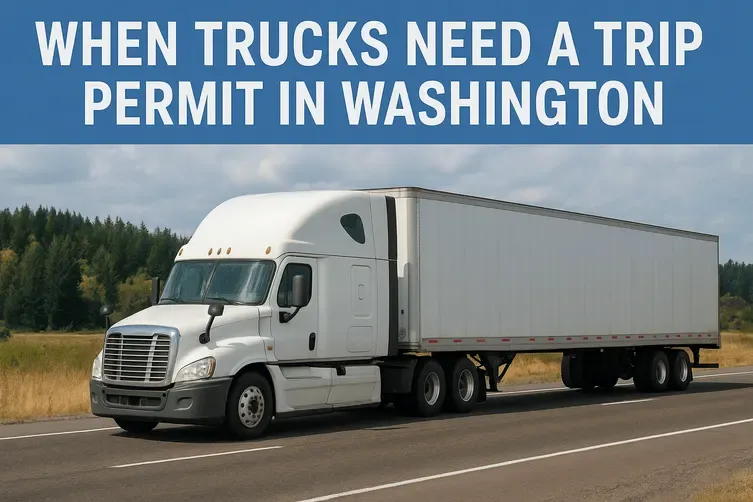
When trucks need a trip permit in Washington
Here’s when trucks need a trip permit in Washington State Department of Licensing / Washington State Department of Transportation (WS-DOT / DOL) in Washington
Nov. 29, 2025, 9:05 a.m.
Read more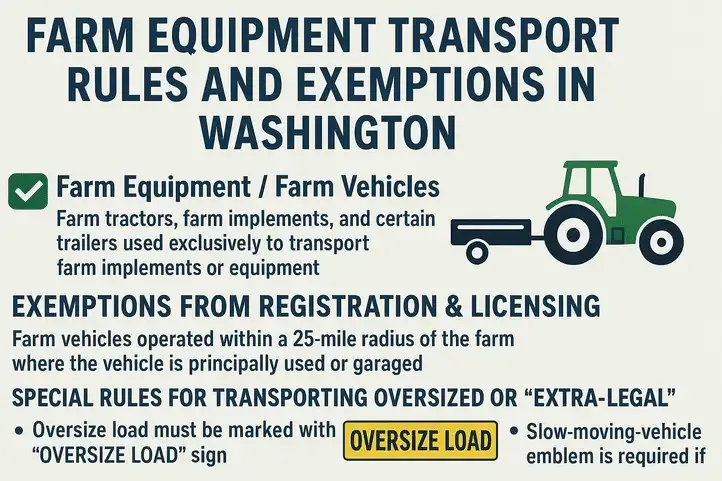
Farm Equipment Transport Rules and Exemptions in Washington
Transporting farm equipment in Washington State involves a unique set of rules, allowances, and exemptions designed to support agricultural operations while maintaining roadway safety. Understanding these requirements helps farmers, carriers, and custom harvesters stay compliant and avoid penalties.
Nov. 26, 2025, 6:02 p.m.
Read more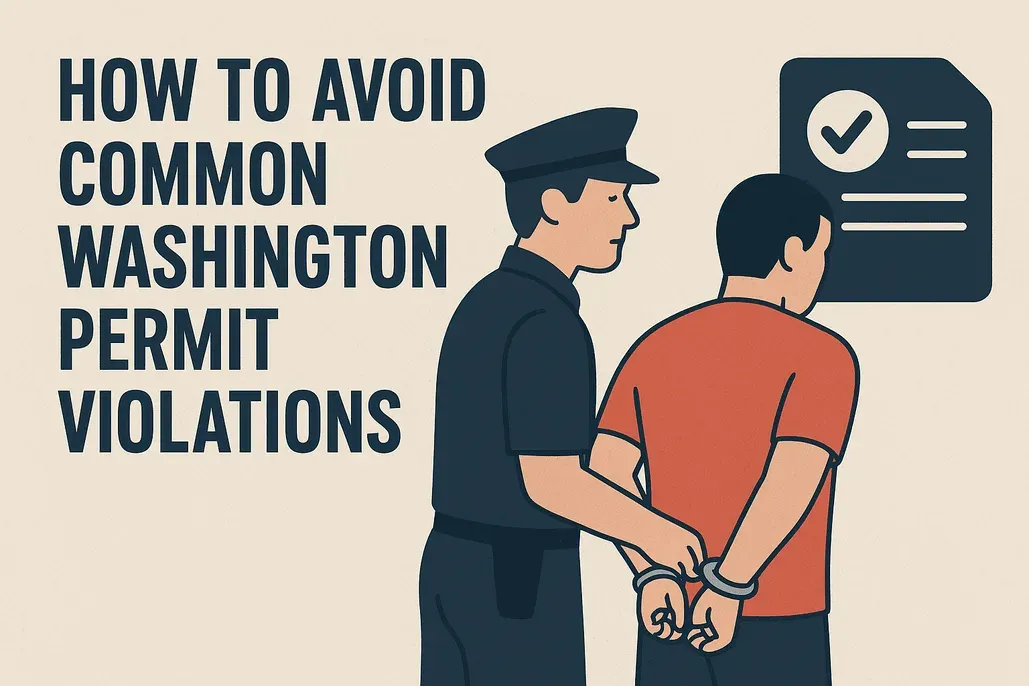
How to Avoid Common Washington Permit Violations
Washington State has some of the strictest oversize/overweight (OS/OW) rules on the West Coast. The Washington State Patrol (WSP) and Washington State Department of Transportation (WSDOT) actively enforce permit compliance through weigh stations, mobile patrols, and roadside inspections. For carriers, avoiding violations is essential—not only to prevent fines but to keep freight moving without delays. This guide outlines the most common Washington permit violations and how trucking companies can prevent them.
Nov. 24, 2025, 4:36 p.m.
Read more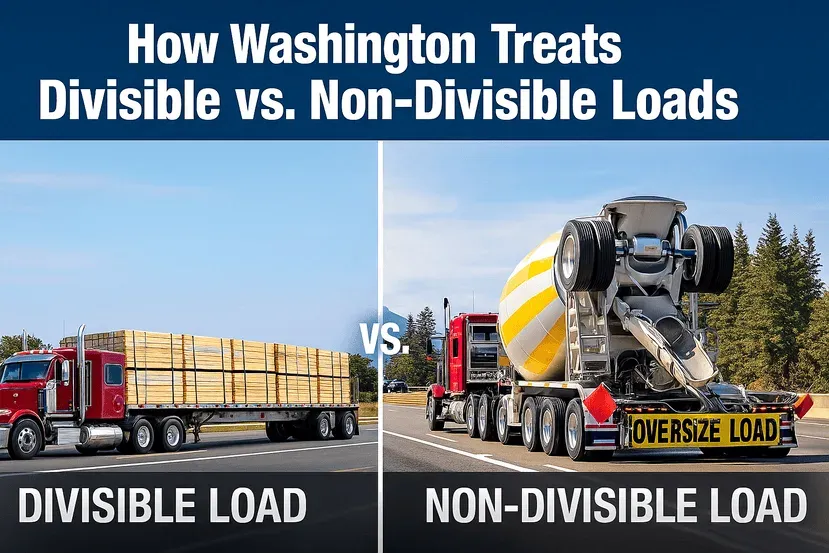
How Washington Treats Divisible vs Non-Divisible Loads
Understanding whether a load is divisible or non-divisible is one of the most important parts of Washington’s oversize/overweight permitting rules. Washington State strictly limits oversize permits for loads that can be reduced, while allowing much more flexibility for freight that cannot be separated without damage, risk, or unreasonable cost. This guide explains how Washington classifies divisible vs. non-divisible loads and how that affects trucking permits in the state.
Nov. 22, 2025, 8:31 p.m.
Read more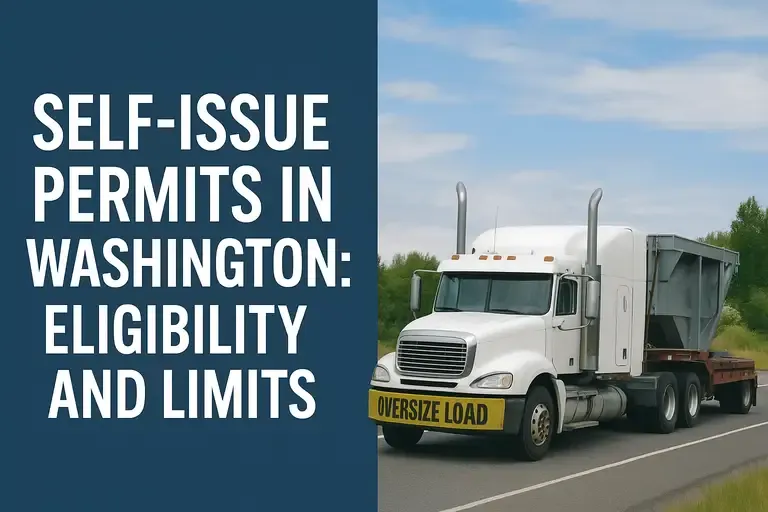
Self-Issue Permits in Washington-Eligibility and Limits
Self-Issue Permits in Washington: Eligibility and Limits
Nov. 21, 2025, 4:50 p.m.
Read more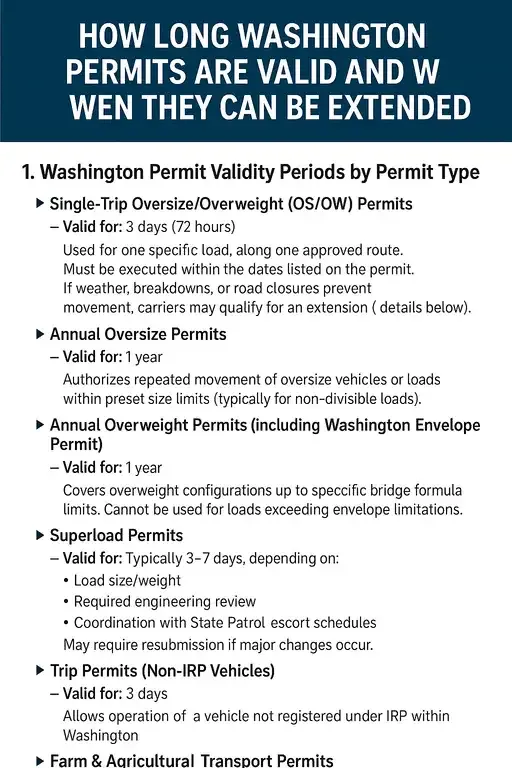
How Long Washington Permits Are Valid and When They Can Be Extended
Understanding the validity period of Washington trucking permits is essential for planning moves, avoiding enforcement issues, and preventing unnecessary reapplications. Washington State issues a variety of trucking permits—each with its own rules for duration, expiration, and extension options. Here’s a breakdown of what carriers need to know.
Nov. 19, 2025, 6:16 p.m.
Read more